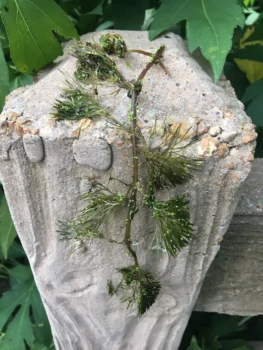
Carolina Fanwort: A Beautiful but Problematic Aquatic Plant
If you’ve ever been captivated by the delicate, feathery underwater foliage in aquarium stores or water gardens, you might have encountered Carolina fanwort (Cabomba caroliniana). While this aquatic perennial certainly has its charms, there’s more to this story than meets the eye – and it’s not all good news for gardeners and ecosystem health.
What is Carolina Fanwort?
Carolina fanwort is a submersed aquatic plant that belongs to the forb family – essentially a non-woody plant that lives its life underwater or in extremely wet conditions. This perennial creates stunning underwater displays with its finely divided, fan-shaped leaves that look almost like green lace swaying in the current. During summer, small white flowers may peek above the water’s surface, though they’re not particularly showy.
The plant has a rapid growth rate and can quickly spread both by seed and vegetatively, which might sound great for filling up a pond quickly – but that’s exactly where the problems begin.
Native Range and Current Distribution
Originally, Carolina fanwort called the southeastern United States home, thriving naturally from Virginia down to Florida and west into Texas. However, this plant has now spread far beyond its native range and can be found across 33 states, from coast to coast, including as far north as Ontario, Canada.
- Species observed
- No observations
The Invasive Problem: Why You Should Think Twice
Here’s where things get serious. Carolina fanwort has earned invasive status in multiple states, with some classifying it as prohibited:
- Connecticut: Invasive, Prohibited
- Michigan: Invasive, Prohibited
- Minnesota: Regulated
- New Hampshire: Prohibited
- Wisconsin: Prohibited
This means that in these areas, it’s actually illegal to plant, sell, or transport Carolina fanwort. The plant’s rapid growth and spreading ability allow it to outcompete native aquatic vegetation, disrupting local ecosystems and clogging waterways.
Growing Conditions and Habitat Requirements
Carolina fanwort is classified as an obligate wetland species across all regions of the United States, meaning it almost always occurs in wetland environments. The plant thrives in:
- USDA Hardiness Zones 6-11
- Full submersion or constantly saturated soils
- pH range from 5.7 to 9.2 (quite adaptable)
- High moisture conditions with no drought tolerance
- Both fine and coarse textured soils
- Areas with at least 140 frost-free days
The plant shows intermediate shade tolerance but prefers sunny conditions. Its high anaerobic tolerance means it can survive in low-oxygen water conditions that might stress other aquatic plants.
Physical Characteristics
Carolina fanwort forms multiple stems with a prostrate, spreading growth habit. The foliage is gray-green with a fine texture, creating that distinctive feathery appearance underwater. While the small white flowers aren’t particularly conspicuous, they appear during the plant’s active growing period in summer.
The plant can spread rapidly both through seeds (which it produces from spring through fall) and vegetative reproduction, with both methods contributing to its invasive potential.
Wildlife and Pollinator Benefits
While some aquatic plants provide significant wildlife benefits, Carolina fanwort’s value to native wildlife is limited and often outweighed by its negative impacts on ecosystem balance. The small flowers may attract some aquatic insects, but the plant’s tendency to form dense monocultures can actually reduce habitat diversity for native species.
Better Alternatives for Water Gardens
Instead of risking the environmental problems associated with Carolina fanwort, consider these native aquatic alternatives:
- Wild celery (Vallisneria americana)
- Water milfoil species native to your region
- Native pondweeds (Potamogeton species)
- Hornwort (Ceratophyllum demersum) where native
These plants can provide similar aesthetic appeal while supporting local ecosystems and staying within legal boundaries.
The Bottom Line
While Carolina fanwort undeniably creates beautiful underwater landscapes with its delicate, fan-like foliage, the environmental risks and legal restrictions make it a plant to avoid in most garden situations. Its invasive nature, rapid spread, and ability to disrupt native ecosystems far outweigh any aesthetic benefits it might provide.
If you’re dreaming of a stunning water garden, there are plenty of native alternatives that can give you that same underwater magic without the ecological headaches. Your local ecosystem – and your neighbors – will thank you for making the responsible choice.