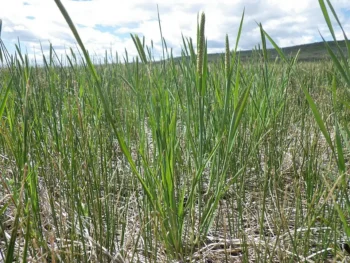
Carolina Foxtail: A Native Grass for Wetland Gardens
Meet Carolina foxtail (Alopecurus carolinianus), a humble native grass that might not win any beauty contests but plays an important ecological role in North American wetlands. This unassuming annual grass is like the quiet kid in class who turns out to be surprisingly helpful – you might overlook it at first, but it’s got some serious environmental benefits up its sleeve.
What is Carolina Foxtail?
Carolina foxtail is a native annual grass that belongs to the graminoid family – basically, it’s a true grass that completes its entire life cycle in one growing season. Don’t let the Carolina in its name fool you; this adaptable little grass calls most of North America home, from Canada down through the lower 48 states.
You might also see it referenced by its former scientific names, including Alopecurus macounii or Alopecurus ramosus, but Alopecurus carolinianus is the current accepted name.
Where Does Carolina Foxtail Grow?
Carolina foxtail is remarkably widespread, growing naturally across an impressive range that includes Alberta, Saskatchewan, British Columbia in Canada, and nearly every U.S. state from Alabama to Wyoming. This extensive distribution speaks to its adaptability and ecological importance.
- Species observed
- No observations
A Word of Caution: Rarity Concerns
Before you rush out to plant Carolina foxtail, here’s something important to know: this grass is considered rare in some areas. In New Jersey, it’s listed as Highlands Listed, S3, which means it’s uncommon and potentially vulnerable. If you’re interested in growing this species, please source seeds or plants only from reputable native plant suppliers who use responsibly collected material – never harvest from wild populations.
Why Grow Carolina Foxtail?
Let’s be honest – you’re probably not going to plant Carolina foxtail for its stunning visual appeal. This is a modest grass that reaches about 1.7 feet tall with fine-textured green foliage and small, inconspicuous green flowers in spring. But here’s why it deserves a spot in the right garden:
- Wetland restoration: As a facultative wetland species, it’s perfect for rain gardens and wet areas
- Native ecosystem support: Provides habitat and structure in naturalized plantings
- Low maintenance: Once established, it self-seeds and requires minimal care
- Soil adaptation: Tolerates a wide range of soil types from coarse to fine-textured
Where Carolina Foxtail Thrives
This grass is a wetland specialist with some flexibility. Carolina foxtail typically grows in moist to wet soils and can handle periodic flooding – it has high anaerobic tolerance, meaning it can survive in oxygen-poor, waterlogged conditions that would kill many other plants.
Here are its preferred growing conditions:
- Moisture: Prefers consistently moist to wet soils
- Soil pH: Adaptable to acidic through neutral soils (pH 4.0-7.5)
- Sun exposure: Full sun (shade intolerant)
- Temperature: Hardy to -43°F, needs at least 100 frost-free days
- Precipitation: Thrives with 15-60 inches annually
Perfect Garden Situations
Carolina foxtail isn’t destined for the formal perennial border, but it shines in these settings:
- Rain gardens: Helps absorb and filter stormwater runoff
- Pond or stream margins: Natural choice for water feature edges
- Wetland restoration projects: Essential for recreating native plant communities
- Naturalized meadows: Adds authentic native character to wild areas
- Bioswales: Excellent for green infrastructure projects
Growing and Care Tips
The good news about Carolina foxtail is that it’s refreshingly low-maintenance once you understand its needs:
Planting
- Direct seed in fall or early spring
- Seeds are tiny (556,000 per pound!), so surface sow or barely cover
- Plant 11,000-43,000 seeds per acre for restoration projects
- Can also propagate by sprigs if plant material is available
Ongoing Care
- Maintain consistent soil moisture, especially during establishment
- No fertilization needed – it prefers low-fertility conditions
- Allow plants to self-seed for natural regeneration
- Avoid foot traffic in wet conditions to prevent soil compaction
What to Expect
Carolina foxtail is active during spring, producing its small flower spikes and seeds by summer. As an annual, individual plants die after producing seed, but the species persists through natural regeneration. Expect moderate growth rates and don’t be surprised if establishment takes patience – seedling vigor is naturally low.
The Bottom Line
Carolina foxtail might not be the showstopper of the plant world, but it’s an authentic piece of North American wetland heritage. If you have a wet spot in your yard that needs a native grass, or you’re working on habitat restoration, this humble annual deserves consideration. Just remember to source it responsibly and give it the moist conditions it craves.
Sometimes the most valuable plants are the ones that work quietly behind the scenes, and Carolina foxtail is definitely one of those unsung heroes of the native plant world.