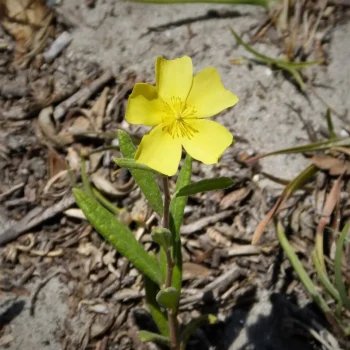
Carolina Frostweed: A Charming Native Groundcover for Southern Gardens
If you’re looking for a low-maintenance native plant that brings sunny cheerfulness to your garden, meet Carolina frostweed (Helianthemum carolinianum). This delightful little perennial might not be the showiest plant in the garden center, but it’s a true gem for gardeners who appreciate native plants that actually belong in their landscape.
What Makes Carolina Frostweed Special?
Carolina frostweed is a native forb – basically a non-woody perennial that hugs the ground and spreads to form a lovely natural carpet. Don’t let its humble appearance fool you; this plant has been thriving in the southeastern United States long before any of us started worrying about what to plant in our gardens.
You might also see this plant listed under its scientific synonym, Crocanthemum carolinianum, but don’t let the fancy names intimidate you. It’s the same cheerful little groundcover either way.
Where Does Carolina Frostweed Call Home?
This native beauty naturally grows across the southeastern states, including Alabama, Arkansas, Florida, Georgia, Louisiana, Mississippi, North Carolina, South Carolina, and Texas. It’s particularly fond of the sandy soils found in coastal plains and pine woodlands throughout this region.
- Species observed
- No observations
Why Your Garden (and Local Wildlife) Will Love It
Carolina frostweed brings several wonderful qualities to your landscape:
- Bright yellow flowers: The cheerful, inch-wide blooms appear in spring and early summer, creating little pools of sunshine
- Pollinator magnet: Native bees and butterflies can’t resist those sunny blooms
- Low maintenance: Once established, it’s practically self-sufficient
- Drought tolerant: Perfect for water-wise gardening
- Textural interest: The silvery-green foliage adds subtle beauty even when not in bloom
Perfect Spots for Carolina Frostweed
This versatile groundcover shines in several garden situations:
- Native plant gardens and wildflower meadows
- Rock gardens and xerophytic landscapes
- Coastal gardens where salt tolerance is helpful
- Slopes needing erosion control
- Naturalized areas where you want something pretty but unfussy
Growing Carolina Frostweed Successfully
The beauty of native plants is that they’re already adapted to your local conditions, and Carolina frostweed is no exception. Here’s what this easygoing plant needs to thrive:
Growing Conditions
- Sunlight: Full sun for best flowering
- Soil: Well-drained, sandy soil (it actually prefers poor soils!)
- pH: Acidic to neutral
- Water: Drought tolerant once established
- Climate: USDA hardiness zones 7-9
Planting and Care Tips
- Plant in spring after the last frost
- Space plants according to your desired coverage speed
- Water regularly the first season to help establish roots
- After establishment, minimal care needed – just occasional weeding
- May self-seed in favorable conditions (a happy bonus!)
- No need for fertilizer – this plant actually prefers lean conditions
The Bottom Line
Carolina frostweed might not win any flashy flower contests, but it’s exactly the kind of reliable, beautiful native plant that makes gardening more sustainable and enjoyable. If you live in its native range and have a sunny spot with well-drained soil, this little charmer could be the perfect addition to your garden. Your local pollinators will thank you, and you’ll love having a groundcover that takes care of itself while adding authentic regional character to your landscape.
Sometimes the best garden plants are the ones that have been quietly thriving in your area for centuries – and Carolina frostweed is definitely one of those hidden gems worth discovering.