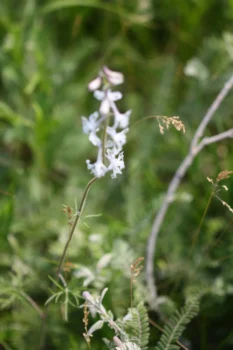
Carolina Larkspur: A Prairie Beauty Worth Growing Responsibly
If you’re looking to add some wild prairie magic to your garden, Carolina larkspur (Delphinium carolinianum virescens) might just be the perfect native perennial for you. This charming wildflower brings tall spires of blue to purple blooms that dance in the breeze, creating a cottage garden feel while supporting local ecosystems.
What Makes Carolina Larkspur Special?
Carolina larkspur is a true American native, belonging to the buttercup family and gracing prairies and grasslands across a wide swath of North America. As a perennial forb, it returns year after year without the woody stems of shrubs or trees, instead sending up fresh herbaceous growth each spring from its underground root system.
The plant produces delicate, deeply-cut foliage that creates an almost ferny texture in the garden. But the real show-stopper comes when those signature flower spikes emerge, reaching skyward with clusters of spurred blooms in shades of blue, purple, and sometimes white.
Where Carolina Larkspur Calls Home
This prairie native has quite an impressive range, naturally occurring across 16 states from Manitoba down to Texas, including Arkansas, Colorado, Illinois, Iowa, Kansas, Kentucky, Minnesota, Missouri, Nebraska, New Mexico, North Dakota, Oklahoma, South Dakota, and Wisconsin. It’s equally at home in both Canada and the lower 48 states, making it a truly continental species.
- Species observed
- No observations
A Word About Rarity
Important note for responsible gardeners: Carolina larkspur has a rarity status of S2 (imperiled) in Arkansas, meaning it faces threats in parts of its native range. If you’re interested in growing this beautiful native, please ensure you source plants or seeds from reputable native plant nurseries that practice responsible propagation methods. Never collect from wild populations.
Why Grow Carolina Larkspur?
There are plenty of reasons to fall in love with this prairie charmer:
- Pollinator magnet: The tubular flowers with their distinctive spurs are perfect for long-tongued pollinators, especially hummingbirds and specialized native bees
- Low maintenance: Once established, it’s quite drought tolerant and requires minimal care
- Vertical interest: The tall flower spikes add height and structure to garden beds
- Native ecosystem support: As a native plant, it provides food and habitat for local wildlife
- Self-seeding potential: May naturalize in suitable conditions, creating beautiful drifts over time
Growing Carolina Larkspur Successfully
Carolina larkspur is surprisingly adaptable and relatively easy to grow when given the right conditions:
Sunlight: Thrives in full sun but can tolerate some light shade
Soil: Prefers well-drained soils and is quite tolerant of various soil types, reflecting its prairie heritage
Water: Drought tolerant once established, though consistent moisture during the first growing season helps with establishment
Climate: Hardy in USDA zones 3-8, making it suitable for a wide range of growing conditions
Perfect Garden Companions
Carolina larkspur shines in prairie-style gardens and naturalized areas. It pairs beautifully with other native grasses and wildflowers like purple coneflower, black-eyed Susan, and little bluestem grass. In more formal settings, it can add a wild, romantic touch to cottage garden borders.
Care and Maintenance Tips
One of the best things about Carolina larkspur is how little fuss it requires:
- Water regularly during the first year to establish strong roots
- Deadhead spent flowers if you want to prevent self-seeding, or leave them for natural propagation
- Cut back to ground level in late fall or early spring
- Divide clumps every 3-4 years if desired, though it’s not necessary
- Avoid over-fertilizing, as rich soils can make plants floppy
The Bottom Line
Carolina larkspur is a wonderful choice for gardeners who want to grow something beautiful, native, and beneficial to local ecosystems. Just remember to source your plants responsibly given its rarity status in some areas. With minimal care and the right growing conditions, you’ll be rewarded with years of stunning blooms and the satisfaction of supporting native biodiversity right in your own backyard.
Whether you’re creating a prairie restoration, adding native plants to an existing garden, or simply want to attract more pollinators, Carolina larkspur deserves a spot on your wish list. Your local hummingbirds will thank you!