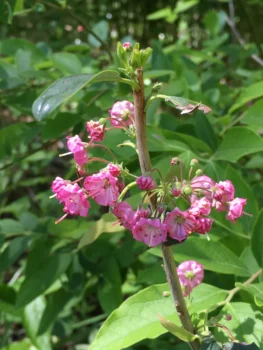
Carolina Laurel: A Hidden Gem for Southeastern Shade Gardens
If you’re looking for a charming native shrub that thrives in the dappled light of woodland gardens, let me introduce you to Carolina laurel (Kalmia carolina). This delightful evergreen shrub might not be as well-known as its flashier cousins, but it deserves a spot in every southeastern gardener’s heart—and landscape.
What Makes Carolina Laurel Special?
Carolina laurel is a native perennial shrub that brings year-round structure to your garden with its dark green, narrow evergreen leaves. But the real show-stopper comes in late spring and early summer when clusters of delicate pink to white cup-shaped flowers appear, creating a soft, romantic display that pollinators absolutely adore.
As a multi-stemmed woody plant, Carolina laurel typically stays manageable in size, usually reaching less than 13-16 feet in height, though most specimens remain much smaller in garden settings. This makes it perfect for those tricky spots where you need something substantial but not overwhelming.
Where Does Carolina Laurel Call Home?
This southeastern native has a relatively focused range, naturally occurring in Georgia, North Carolina, South Carolina, Tennessee, and Virginia. If you live in these states, you’re getting a plant that’s perfectly adapted to your local climate and ecosystem—always a smart gardening choice!
- Species observed
- No observations
Finding the Perfect Spot in Your Garden
Carolina laurel is the ultimate team player in woodland and naturalized garden settings. It works beautifully as:
- An understory shrub beneath larger trees
- A structural element in shade gardens
- Part of a native plant community
- A naturalistic border or screening plant
This shrub is particularly well-suited for woodland gardens, natural landscapes, and any space where you want to create habitat for local wildlife while maintaining a polished look.
Growing Conditions That Make Carolina Laurel Happy
Like many woodland natives, Carolina laurel appreciates some specific growing conditions but isn’t overly fussy once established. Here’s what it loves:
- Light: Partial shade to full shade (protect from hot afternoon sun)
- Soil: Acidic, well-draining soil with consistent moisture
- Climate: Cool, humid conditions work best
- Hardiness: Generally thrives in USDA zones 5-8
Interestingly, Carolina laurel has different wetland preferences depending on where it’s growing. In coastal areas, it leans toward wetter conditions, while in mountain and piedmont regions, it’s more flexible about moisture levels.
Planting and Care Made Simple
The good news? Carolina laurel is refreshingly low-maintenance once you get it established. Here are the key tips for success:
- Timing: Plant in spring or fall for best establishment
- Mulching: Apply a 2-3 inch layer of organic mulch to retain moisture and suppress weeds
- Watering: Keep consistently moist but not waterlogged, especially during the first year
- Pruning: Minimal pruning needed—just remove dead or damaged wood
- Root care: Avoid disturbing the root system once established
Wildlife and Pollinator Benefits
One of the best reasons to grow Carolina laurel is its value to local ecosystems. The spring flowers provide nectar for native bees, butterflies, and other beneficial insects. As a native plant, it also supports the complex web of relationships between plants and wildlife that have evolved together over thousands of years.
Important note: While the flowers are beneficial to pollinators, remember that all parts of Kalmia plants contain compounds that are toxic to humans and pets. Plant it where it can be admired but not accidentally ingested.
Is Carolina Laurel Right for Your Garden?
Carolina laurel is an excellent choice if you:
- Live within its native range (Georgia, North Carolina, South Carolina, Tennessee, or Virginia)
- Have a woodland or naturalized garden style
- Want to support local pollinators and wildlife
- Appreciate subtle, elegant beauty over flashy displays
- Have partially shaded areas that need structure and year-round interest
While it might not be the right fit for formal gardens or full-sun locations, Carolina laurel offers something special: the satisfaction of growing a truly native plant that connects your garden to the larger landscape. Plus, there’s something wonderfully rewarding about nurturing a plant that’s been calling your region home for centuries.
Ready to welcome this southeastern charmer into your garden? Your local pollinators—and your woodland garden—will thank you for it.