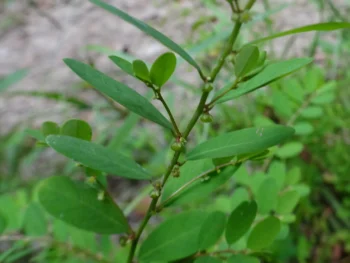
Carolina Leaf-Flower: A Humble Native Annual Worth Knowing
If you’re looking for a showstopper that’ll have your neighbors stopping in their tracks, Carolina leaf-flower (Phyllanthus caroliniensis) probably isn’t your plant. But if you’re interested in supporting native ecosystems with a low-maintenance, adaptable annual that quietly does its job in the garden, this little forb might just earn a spot in your heart—and your landscape.
What Exactly Is Carolina Leaf-Flower?
Carolina leaf-flower is a native annual forb that belongs to the spurge family. As a forb, it’s an herbaceous plant without woody tissue—think of it as nature’s version of a seasonal worker that shows up, does its job, sets seed, and calls it a year. Don’t let its humble appearance fool you, though. This unassuming little plant has been quietly supporting North American ecosystems for ages.
Where You’ll Find It Growing Wild
This adaptable native calls a impressive chunk of the United States home, thriving across 23 states from the Atlantic Coast to the Great Plains. You’ll find Carolina leaf-flower growing wild in Alabama, Arkansas, Delaware, District of Columbia, Florida, Georgia, Illinois, Indiana, Kansas, Kentucky, Louisiana, Maryland, Mississippi, Missouri, North Carolina, Ohio, Oklahoma, Pennsylvania, South Carolina, Tennessee, Texas, Virginia, and West Virginia.
- Species observed
- No observations
The Good, The Bad, and The Realistic
Let’s be honest about what you’re getting with Carolina leaf-flower. This isn’t a plant you’ll be featuring on your garden Instagram account. The flowers are tiny, white, and barely noticeable. The leaves are small and rounded, creating a fine, delicate texture rather than bold foliage interest.
But here’s where it gets interesting: sometimes the best garden plants are the ones that work behind the scenes. Carolina leaf-flower excels as a supporting cast member in naturalized areas and wildflower gardens, where its modest charm actually becomes an asset.
Why Consider Growing Carolina Leaf-Flower?
While it won’t win any beauty contests, Carolina leaf-flower brings several benefits to the table:
- Native plant that supports local ecosystems
- Attracts small pollinators and beneficial insects
- Extremely low maintenance once established
- Self-seeding annual that naturalizes easily
- Adaptable to various growing conditions
- Works well as ground cover in informal settings
Growing Conditions and Care
One of Carolina leaf-flower’s greatest strengths is its adaptability. This flexible native can handle a range of conditions, making it perfect for those challenging spots in your garden.
Sunlight: Full sun to partial shade—it’s not picky
Soil: Adaptable to various soil types, from moist to moderately dry conditions
Hardiness: Suitable for USDA zones 5-10
Moisture: As a facultative wetland plant, it can handle both wet and dry conditions, though it seems to prefer somewhere in the middle
Planting and Care Tips
The beauty of Carolina leaf-flower lies in its simplicity. Here’s how to work with this easygoing native:
- Start from seed—it’s the most practical approach for this annual
- Scatter seeds in fall or early spring in naturalized areas
- No need for special soil preparation; it adapts to what you’ve got
- Water occasionally during establishment, then let nature take over
- Allow plants to self-seed for natural populations
- Minimal care required once established—perfect for low-maintenance landscapes
Where Does It Fit in Your Garden?
Carolina leaf-flower shines in specific garden settings where its understated nature becomes a feature rather than a bug:
- Wildflower gardens and meadows
- Naturalized areas where you want native ground cover
- Native plant gardens focused on ecosystem support
- Low-maintenance landscapes
- Areas where you want to encourage beneficial insects
The Bottom Line
Carolina leaf-flower isn’t going to be the star of your garden show, and that’s perfectly okay. Sometimes the most valuable plants are the ones that work quietly in the background, supporting pollinators, adapting to challenging conditions, and asking for almost nothing in return.
If you’re building a native plant garden, creating naturalized areas, or simply want to support local ecosystems with minimal effort, Carolina leaf-flower deserves consideration. It’s proof that not every garden hero needs to be flashy—sometimes steady, reliable, and native is exactly what your landscape needs.