Carolina Phaeoceros: The Tiny Hornwort You’ve Probably Never Noticed
Have you ever spotted tiny, horn-like green structures poking up from the soil in your shaded garden beds? You might have encountered Carolina phaeoceros (Phaeoceros carolinianus), one of North America’s most widespread yet overlooked native plants. This diminutive hornwort belongs to an ancient group of plants that have been quietly doing their job in our ecosystems for millions of years.
What Exactly Is a Hornwort?
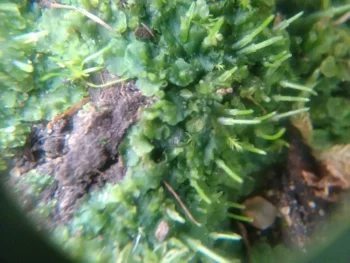
Carolina phaeoceros is a hornwort, which puts it in the fascinating world of bryophytes alongside mosses and liverworts. These aren’t your typical garden plants – they’re some of the most primitive land plants on Earth! The horn part of their name comes from their distinctive sporophytes (reproductive structures) that look like tiny green horns or needles sticking up from flat, green leaf-like structures called thalli.
Unlike flowering plants, hornworts reproduce through spores rather than seeds, and they lack true roots, stems, and leaves. Instead, they anchor themselves with simple structures called rhizoids and absorb water and nutrients directly through their surfaces.
Where You’ll Find Carolina Phaeoceros
This hardy little hornwort is native to North America, with a range extending from southern Canada down through the eastern and central United States to the Gulf Coast states. It’s particularly common in the southeastern regions but can be found as far west as the Great Plains and north into parts of Canada.
Carolina phaeoceros thrives in USDA hardiness zones 4 through 9, making it adaptable to a wide range of climates. You’re most likely to spot it in moist, shaded locations such as woodland floors, the edges of streams, disturbed soil areas, and even in the cracks of sidewalks or between pavers.
Is It Beneficial for Your Garden?
While Carolina phaeoceros might not win any beauty contests, it’s actually quite beneficial for garden ecosystems:
- Soil health indicator: Its presence often indicates healthy, well-balanced soil conditions
- Erosion control: Helps stabilize soil in moist, shaded areas
- Water retention: Acts like a natural sponge, helping retain moisture in the soil
- Nitrogen fixation: Contains symbiotic cyanobacteria that help fix atmospheric nitrogen, enriching the soil
- Habitat provider: Offers shelter for tiny invertebrates and microorganisms
Think of Carolina phaeoceros as nature’s quiet worker bee – it’s not flashy, but it’s performing important ecological services in your garden’s understory.
How to Identify Carolina Phaeoceros
Spotting this tiny hornwort requires a keen eye:
- Size: The plant body (thallus) is typically only 1-3 centimeters across
- Color: Bright to dark green, sometimes with a slightly bluish tint
- Shape: Flat, ribbon-like or rosette-forming thalli that lie close to the ground
- Texture: Smooth surface with a somewhat waxy appearance
- Reproductive structures: Look for the characteristic horns – slender, green to yellow-green sporophytes that can grow 1-4 centimeters tall
- Habitat: Always in moist, shaded locations on bare soil or thin organic matter
Living Peacefully with Carolina Phaeoceros
If you discover Carolina phaeoceros in your garden, consider yourself lucky to have such an ancient and ecologically important plant sharing your space! Here are some ways to coexist happily:
- Don’t disturb it: Avoid excessive foot traffic or cultivation in areas where it’s established
- Maintain moisture: Keep these areas consistently moist but not waterlogged
- Preserve shade: Maintain overhead canopy coverage to provide the filtered light it prefers
- Minimal fertilization: These plants don’t need (and may not appreciate) additional fertilizers
- Natural mulching: Allow leaf litter to accumulate naturally around it
The Bottom Line
Carolina phaeoceros might not be the star of your garden show, but it’s definitely a valuable supporting cast member. This tiny hornwort represents a living link to ancient plant lineages and provides genuine ecological benefits to your garden ecosystem. Rather than trying to eliminate it, embrace its presence as a sign of a healthy, biodiverse garden environment.
Next time you’re wandering through your shaded garden areas, take a moment to look down and appreciate these remarkable little survivors. They’ve been perfecting their craft for hundreds of millions of years – that’s definitely worth a little respect!