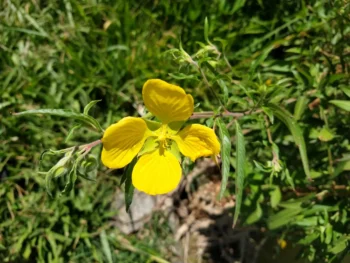
Carolina Primrose-Willow: A Native Gem for Wet Spots in Your Garden
If you’ve got a soggy spot in your yard that makes you scratch your head wondering what to plant there, meet your new best friend: Carolina primrose-willow (Ludwigia bonariensis). This charming native perennial absolutely loves having wet feet and will reward you with cheerful yellow blooms from summer through fall.
What Exactly Is Carolina Primrose-Willow?
Carolina primrose-willow is a native perennial forb that belongs to the evening primrose family. Don’t let the fancy botanical name fool you – this is a down-to-earth plant that’s been quietly doing its thing in wetlands across the Southeast for ages. You might also see it listed under its old scientific name, Jussiaea neglecta, but don’t worry – it’s the same plant with a new name tag.
As a forb, this plant stays herbaceous (no woody stems here!) and sends up fresh growth each year from its root system. Think of it as nature’s way of creating a reliable, low-maintenance addition to your wet garden areas.
Where Does It Call Home?
This southeastern native has made itself comfortable across four states: Alabama, Florida, North Carolina, and South Carolina. It’s perfectly adapted to the climate and growing conditions of this region, which means less fussing for you once it’s established.
- Species observed
- No observations
Why Your Garden (and Local Wildlife) Will Love It
Carolina primrose-willow brings several benefits to your landscape:
- Native pollinator magnet: Those bright yellow, four-petaled flowers are like tiny beacons for native bees, butterflies, and other beneficial insects
- Wetland warrior: Officially classified as an obligate wetland plant, meaning it’s a natural choice for rain gardens, pond edges, and those perpetually damp areas
- Low-maintenance charm: Once established, it pretty much takes care of itself
- Extended bloom time: Flowers from summer through fall, giving your garden consistent color when many other plants are calling it quits
Perfect Garden Spots for Carolina Primrose-Willow
This plant is tailor-made for specific garden situations:
- Rain gardens: Excellent for managing stormwater runoff
- Pond or water feature margins: Creates a natural transition from water to land
- Native plant gardens: Adds authentic regional character
- Wildlife gardens: Supports local ecosystem health
- Wetland restoration projects: Helps recreate natural wetland communities
Growing Conditions That Make It Happy
Carolina primrose-willow isn’t picky, but it does have some non-negotiable preferences:
- Sunlight: Full sun to partial shade (at least 4-6 hours of direct sun)
- Soil moisture: Consistently moist to wet – this plant can even handle standing water
- Soil type: Adaptable to various soil types as long as moisture needs are met
- Climate: Thrives in USDA hardiness zones 8-10
Planting and Care Made Simple
Getting Carolina primrose-willow established is refreshingly straightforward:
Planting: Spring is your best bet for planting. Choose a location that stays consistently moist or can be easily watered. Space plants about 12-18 inches apart if you’re creating a grouping.
Watering: This is where Carolina primrose-willow shines – you can’t really overwater it! Keep the soil consistently moist to wet, especially during the first growing season.
Maintenance: Minimal fuss required. You can deadhead spent flowers if you want to keep things tidy, or leave them for wildlife to enjoy the seeds. The plant may self-seed in ideal conditions, which is usually a welcome bonus in naturalized settings.
Winter care: As a perennial, it will die back in winter and return the following spring. Simply cut back dead foliage in late winter or early spring.
Is Carolina Primrose-Willow Right for Your Garden?
This native beauty is perfect if you:
- Have consistently moist or wet areas in your landscape
- Want to support local wildlife and pollinators
- Prefer low-maintenance plants
- Are creating rain gardens or wetland areas
- Live in the southeastern United States (zones 8-10)
However, it might not be the best choice if you have dry, well-drained garden areas or live outside its natural hardiness range.
The Bottom Line
Carolina primrose-willow proves that native plants don’t have to be boring or difficult. This cheerful wetland specialist offers reliable blooms, supports local wildlife, and actually thrives in those challenging wet spots that stump many gardeners. If you’re looking to add some authentic southeastern charm to your landscape while supporting your local ecosystem, this little yellow-flowered gem deserves a spot in your garden.