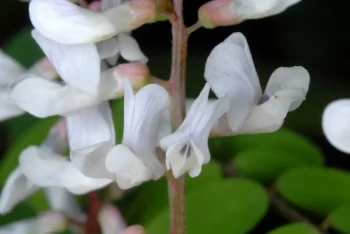
Carolina Vetch: A Delicate Native Climber Worth Protecting
If you’re looking to add a touch of understated elegance to your native garden while supporting local ecosystems, Carolina vetch might just be the perfect addition. This charming perennial vine brings delicate beauty and ecological benefits to landscapes across much of eastern North America—though finding it might require a bit of detective work.
What is Carolina Vetch?
Carolina vetch (Vicia caroliniana) is a native perennial forb that grows as a climbing or trailing vine. As a member of the legume family, this plant does double duty in the garden: it produces lovely small flowers while quietly improving your soil by fixing nitrogen. You might also encounter it listed under the synonym Vicia hugeri in older botanical references.
Where Does Carolina Vetch Grow Naturally?
This native beauty has quite an impressive range, naturally occurring across a large swath of North America. You’ll find Carolina vetch growing from Ontario, Canada, down through the southeastern United States and as far west as Texas and Minnesota. It calls home to states including Alabama, Arkansas, Delaware, Florida, Georgia, Illinois, Indiana, Kentucky, Louisiana, Maryland, Michigan, Mississippi, Missouri, New Jersey, New York, North Carolina, Ohio, Oklahoma, Pennsylvania, South Carolina, Tennessee, Virginia, West Virginia, and Wisconsin, plus the District of Columbia.
- Species observed
- No observations
A Word of Caution: Rarity Status
Before you start planning your Carolina vetch garden, there’s something important you should know. This lovely native is becoming increasingly rare in some areas. In New Jersey, for example, Carolina vetch holds an endangered status and is listed as S1, meaning it’s critically imperiled in the state. If you’re fortunate enough to find this plant available for purchase, make absolutely sure you’re buying from a reputable native plant nursery that sources their plants responsibly—never from wild collection.
Garden Appeal and Landscape Role
Carolina vetch won’t win any awards for showstopping blooms, but its subtle charm has its place in the right garden setting. The small, white to pale blue flowers appear in spring, creating delicate clusters along the vine. The compound leaves add a fine-textured, ferny appearance that works beautifully as a ground cover or when allowed to climb up supports.
This plant shines in:
- Woodland gardens where it can naturalize
- Native plant restoration projects
- Areas where you want gentle, unobtrusive coverage
- Gardens focused on supporting local wildlife
Growing Conditions and Care
One of Carolina vetch’s best qualities is its adaptability. This hardy perennial thrives in USDA hardiness zones 3-9, making it suitable for most temperate North American gardens. It prefers well-drained soils but isn’t particularly fussy about soil type.
For light requirements, Carolina vetch is quite flexible, growing well in partial shade to full sun conditions. According to wetland classifications, it typically prefers upland sites, rarely occurring in wetland areas across most of its range, though it shows slightly more tolerance for moist conditions in coastal and piedmont regions.
Planting and Maintenance Tips
Carolina vetch is refreshingly low-maintenance once established. Here are some tips for success:
- Plant in spring after the last frost
- Provide a support structure if you want it to climb, or let it trail as ground cover
- Water regularly during the first growing season to establish roots
- Once established, it typically requires minimal supplemental watering
- Allow it to self-seed naturally if you want it to spread
- No fertilizer needed—as a legume, it actually improves soil fertility
Wildlife and Pollinator Benefits
While Carolina vetch may not be a wildlife magnet, it does provide modest benefits to local ecosystems. The flowers attract small bees, butterflies, and other pollinators during blooming season. Research indicates that it provides a small percentage (2-5%) of the diet for various wildlife including large animals, small mammals, and terrestrial birds, while also offering sparse cover opportunities.
As a native legume, its primary ecological value may lie in its soil-improving capabilities and its role in supporting the broader web of native plant communities.
Should You Grow Carolina Vetch?
Carolina vetch is an excellent choice for gardeners who appreciate subtle beauty and want to support native ecosystems—but only if you can source it responsibly. Given its rarity in some areas, this plant is better suited for dedicated native plant gardeners rather than casual landscapers.
Consider Carolina vetch if you:
- Have a woodland or naturalized garden setting
- Want to support native pollinators
- Appreciate understated, delicate plants
- Are working on habitat restoration
- Can source plants from responsible nurseries
This gentle native vine may not be the most dramatic addition to your garden, but for those who value ecological authenticity and quiet beauty, Carolina vetch offers a meaningful way to connect your landscape to the natural heritage of eastern North America—while helping preserve a species that deserves our conservation attention.