Carpenter’s Square: A Quietly Impressive Native Perennial for Shade Gardens
If you’re looking for a native plant that won’t demand center stage but will quietly do its job in your garden, meet carpenter’s square (Scrophularia marilandica). This unassuming perennial might not win any beauty contests, but it’s a hardworking member of the native plant community that deserves a spot in your landscape.
What is Carpenter’s Square?
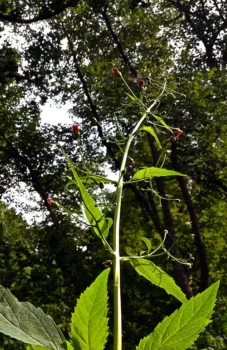
Carpenter’s square is a native North American perennial herb that belongs to the figwort family. As a forb, it’s an herbaceous plant that lacks woody stems but comes back year after year from its root system. The plant gets its common name from its distinctive square stems, which carpenters would recognize as being perfectly four-sided – nature’s own precision tool!
Where Does It Call Home?
This adaptable native has an impressive range across North America. You’ll find carpenter’s square growing naturally from southern Canada down through most of the eastern United States, stretching as far west as the Great Plains. It thrives in states from Maine to Florida and from the Atlantic coast to Texas, making it one of our more widely distributed native perennials.
- Species observed
- No observations
Why Consider Carpenter’s Square for Your Garden?
While carpenter’s square might not be the showiest plant in your garden, it brings several valuable qualities to the landscape:
- True native credentials: Supporting local ecosystems by growing plants that belong here
- Pollinator magnet: The small reddish-brown flowers attract bees, wasps, and other beneficial insects
- Architectural interest: Those square stems and upright growth habit add structural elements to garden beds
- Low maintenance: Once established, it pretty much takes care of itself
- Adaptable: Tolerates a range of growing conditions
Perfect Spots in Your Landscape
Carpenter’s square shines in several garden settings:
- Woodland gardens: Excellent for naturalized shade areas
- Native plant gardens: A must-have for authentic regional plantings
- Pollinator gardens: Provides nectar for small beneficial insects
- Background plantings: Works well behind showier perennials
- Wildlife gardens: Part of the native food web
Growing Carpenter’s Square Successfully
The good news is that carpenter’s square is remarkably easy to grow. Here’s what it needs to thrive:
Light Requirements: Prefers partial shade to full shade, though it can tolerate some morning sun
Soil Needs: Thrives in moist, rich soils but adapts to various soil types. Good drainage is appreciated, though it’s more moisture-tolerant than many plants
Water: Prefers consistent moisture but isn’t fussy – it’s classified as facultative upland, meaning it usually grows in non-wetland areas but can handle some moisture
Hardiness: Tough as nails in USDA zones 4-9
Planting and Care Tips
Carpenter’s square is refreshingly low-maintenance:
- Plant in spring or fall when temperatures are moderate
- Space plants about 2-3 feet apart – they can reach 3-6 feet tall
- Water regularly the first year to establish roots
- Once established, it’s quite drought-tolerant
- Cut back after flowering if you want to prevent self-seeding (though the seeds feed birds)
- Divide clumps every few years if they become overcrowded
A Word of Caution (The Good Kind)
Carpenter’s square is a generous self-seeder, which can be either a blessing or a challenge depending on your garden style. If you love a naturalized look and want to support local wildlife, let it spread. If you prefer more controlled plantings, simply deadhead the flowers before they set seed.
The Bottom Line
Carpenter’s square might not be the plant you fall in love with at first sight, but it’s the kind of reliable, beneficial native that forms the backbone of a healthy ecosystem garden. It’s perfect for gardeners who want to support local wildlife while maintaining a low-maintenance landscape. Plus, there’s something satisfying about growing a plant that’s been quietly doing its job in North American ecosystems for thousands of years – square stems and all!