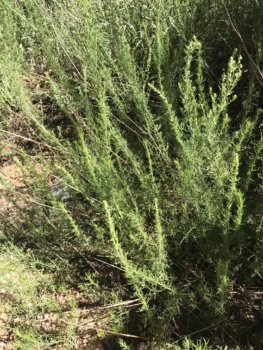
Carruth’s Sagewort: A Resilient Native for Water-Wise Gardens
If you’re looking for a tough, drought-tolerant native plant that can handle challenging conditions, Carruth’s sagewort (Artemisia carruthii) might just be the unsung hero your garden needs. This perennial herb belongs to the diverse Artemisia family, known for their silvery foliage and remarkable ability to thrive where other plants struggle.
What Makes Carruth’s Sagewort Special?
Carruth’s sagewort is a true American native, naturally occurring across a impressive range of states from the Southwest to the Great Plains and even reaching into unexpected places like New York and Rhode Island. As a perennial forb, it comes back year after year without the woody stems of shrubs, making it a reliable but low-profile addition to native plant communities.
This hardy plant grows in Arizona, Colorado, Indiana, Kansas, Michigan, Missouri, Nebraska, Nevada, New Mexico, New York, Oklahoma, Rhode Island, Texas, and Utah—quite the geographic spread for a single species! This wide distribution hints at its adaptability and resilience.
- Species observed
- No observations
Garden Appeal and Design Role
Like its Artemisia relatives, Carruth’s sagewort likely features the characteristic silvery-gray foliage that makes this plant family so beloved by gardeners. The subtle, muted tones provide an excellent backdrop for more colorful flowering plants and create a sophisticated, drought-adapted aesthetic.
This plant works particularly well in:
- Native plant gardens and prairie restorations
- Water-wise and xerophytic landscapes
- Rock gardens and naturalized areas
- Areas where you want low-maintenance, resilient ground cover
Growing Carruth’s Sagewort Successfully
While specific growing information for Carruth’s sagewort is limited in the literature, we can make educated assumptions based on its wide native range and its membership in the famously tough Artemisia family.
Ideal Growing Conditions
Most Artemisia species prefer:
- Full sun exposure
- Well-draining soils (they hate wet feet!)
- Low to moderate water requirements once established
- Poor to average soil fertility—they don’t need rich conditions
Climate Considerations
Based on its natural distribution, Carruth’s sagewort likely thrives in USDA hardiness zones 4 through 8, handling both cold winters and hot, dry summers with aplomb.
Why Choose Native Plants Like Carruth’s Sagewort?
Planting native species like Carruth’s sagewort offers numerous benefits beyond just having a pretty garden. Native plants are naturally adapted to local climate conditions, requiring less water, fertilizer, and pest management once established. They also support local ecosystems and wildlife in ways that non-native plants simply cannot.
The Bottom Line
While Carruth’s sagewort might not be the flashiest plant in your garden center, it represents the kind of resilient, low-maintenance native that forms the backbone of sustainable landscaping. If you can source it from a reputable native plant nursery, it could be an excellent addition to drought-tolerant gardens and native plant communities.
Keep in mind that information about this specific species is somewhat limited, so consider it an adventure in native gardening! As with any native plant, always source your plants responsibly from nurseries that propagate rather than wild-collect their stock.