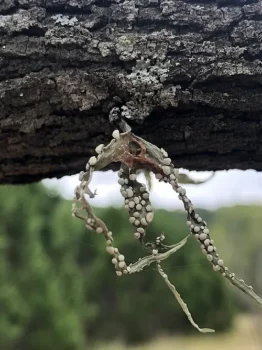
Cartilage Lichen: The Fascinating Ramalina celastri in Your Garden
If you’ve ever noticed grayish-green, branching growths on tree bark or rocks in your yard, you might have encountered the intriguing cartilage lichen (Ramalina celastri). This remarkable organism isn’t actually a plant at all – it’s a lichen, which makes it a fascinating partnership between fungi and algae that’s been thriving in North American landscapes for centuries.
What Exactly Is Cartilage Lichen?
Cartilage lichen is a composite organism that forms when fungi and algae team up in a mutually beneficial relationship. The fungi provide structure and protection, while the algae produce food through photosynthesis. This incredible collaboration creates the distinctive branching, crusty patches you might spot in your outdoor spaces.
You might also see this species referred to by its scientific synonyms, including Ramalina ecklonii or Ramalina yemensis, though Ramalina celastri is the accepted name today.
Where You’ll Find Cartilage Lichen
This native North American species is particularly common in western regions, especially throughout California and the southwestern United States. It naturally establishes itself on tree bark, rocks, soil, and even wooden structures, thriving in areas with relatively clean air.
Identifying Cartilage Lichen in Your Landscape
Spotting cartilage lichen is easier once you know what to look for:
- Grayish-green to pale green coloration
- Branching, somewhat shrubby or crusty growth pattern
- Grows flat against surfaces like tree bark and rocks
- Texture that’s somewhat cartilage-like (hence the name!)
- Forms irregular patches that can spread slowly over time
Is Cartilage Lichen Beneficial for Your Garden?
Absolutely! While you can’t plant or cultivate cartilage lichen, its natural presence in your garden is actually a wonderful sign. Here’s why you should celebrate finding it:
- Air quality indicator: Lichens are sensitive to air pollution, so their presence suggests you have relatively clean air
- Ecosystem support: Provides habitat and food for small insects and other tiny creatures
- Natural beauty: Adds subtle texture and natural character to tree bark and rock surfaces
- Soil building: Over time, lichens help break down rock surfaces, contributing to soil formation
Can You Grow Cartilage Lichen?
Here’s where cartilage lichen differs dramatically from traditional garden plants – you simply can’t plant it or encourage its growth through typical gardening methods. Lichens establish themselves naturally and grow incredibly slowly, sometimes taking years or even decades to form visible colonies.
The best thing you can do is:
- Avoid disturbing areas where you notice lichen growth
- Maintain good air quality around your property
- Leave natural surfaces like tree bark and rocks undisturbed
- Avoid using harsh chemicals or pressure washing areas where lichens are present
Living Alongside Cartilage Lichen
If you’re lucky enough to have cartilage lichen naturally occurring in your landscape, consider it a gift from nature. This slow-growing organism has been around for millions of years and represents one of the most successful partnerships in the natural world.
Rather than trying to remove or control it, embrace its presence as a sign of a healthy, balanced ecosystem. The subtle beauty of its branching patterns and the knowledge that it’s quietly supporting biodiversity in your garden makes cartilage lichen a truly special find.
Next time you’re exploring your outdoor spaces, take a moment to appreciate these remarkable organisms – they’re living proof that some of nature’s most interesting residents arrive on their own timeline, creating beauty and supporting life in ways we’re only beginning to understand.