Cartilage Lichen: Nature’s Air Quality Monitor in Your Garden
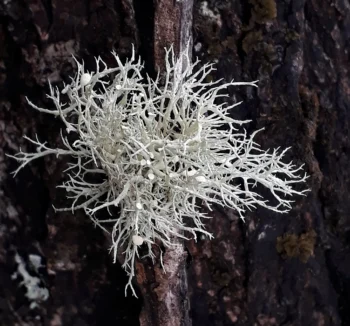
Have you ever noticed those pale, branching growths on tree bark or rocks that look a bit like tiny coral formations? Meet the cartilage lichen (Ramalina geniculata), a fascinating organism that’s not quite plant, not quite fungus, but something wonderfully unique that might already be calling your garden home.
What Exactly Is Cartilage Lichen?
Here’s where things get interesting: cartilage lichen isn’t actually a plant at all! It’s a lichen – a remarkable partnership between a fungus and an algae that work together as one organism. The fungus provides structure and protection, while the algae produces food through photosynthesis. It’s like nature’s original roommate situation, and it’s been working beautifully for millions of years.
The common name cartilage lichen comes from its distinctive texture and appearance – it has a somewhat rubbery, cartilage-like feel when fresh and moist. Scientifically known as Ramalina geniculata, this species is native to North America and can be found naturally establishing itself in suitable environments.
Where You’ll Find Cartilage Lichen
Cartilage lichen is primarily found across western North America, particularly along the Pacific Coast regions where the air quality and humidity levels create ideal conditions for its growth.
Identifying Cartilage Lichen in Your Garden
Spotting cartilage lichen is easier than you might think once you know what to look for:
- Gray-green to pale greenish coloration
- Branching, strap-like structure that resembles tiny antlers or coral
- Grows on tree bark, rocks, or other hard surfaces
- Has a somewhat rubbery texture when moist
- Becomes brittle and lighter in color when dry
- Typically grows in patches or colonies
Is Cartilage Lichen Beneficial for Your Garden?
Absolutely! While you can’t exactly plant cartilage lichen like you would a flower or shrub, having it appear naturally in your garden is actually a wonderful sign. Here’s why you should celebrate its presence:
- Air quality indicator: Lichens are incredibly sensitive to air pollution, so their presence indicates relatively clean air in your area
- Ecosystem support: They provide food and shelter for tiny insects and other small creatures
- Natural beauty: They add unique texture and visual interest to natural garden settings
- Low maintenance: They require absolutely no care from you once established
Creating Conditions Where Cartilage Lichen Might Thrive
You can’t plant cartilage lichen in the traditional sense, but you can create an environment where it might naturally establish itself:
- Maintain good air quality around your property
- Avoid using harsh chemicals or pesticides near potential growing surfaces
- Provide surfaces like natural stone or mature tree bark
- Ensure adequate humidity and air circulation
- Be patient – lichens establish very slowly
A Word of Caution: Don’t Force It
While it might be tempting to try to transplant cartilage lichen from one location to another, this rarely works and can damage existing colonies. Lichens are extremely slow-growing and sensitive to disturbance. Instead, focus on creating the right conditions and let nature take its course.
Appreciating Nature’s Partnership
Cartilage lichen represents one of nature’s most successful partnerships, and having it in your garden is a sign that you’re doing something right environmentally. Rather than trying to cultivate it, simply appreciate it as a natural indicator of your garden’s health and a fascinating example of how different organisms can work together.
Next time you’re walking through your garden, take a moment to look for these subtle but remarkable organisms. They’re a reminder that some of the most interesting plants in our landscapes aren’t plants at all – they’re something far more extraordinary.