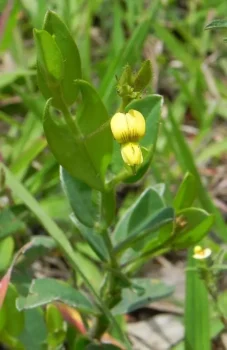
Cascabelillo Alado: A Native Puerto Rican Annual Worth Getting to Know
If you’re gardening in Puerto Rico and looking to support native plant species, you might want to learn about cascabelillo alado (Crotalaria stipularia). This charming annual forb is a true island native that deserves a spot in conversations about authentic Puerto Rican flora, even though it’s not commonly found in mainstream gardening circles.
What Exactly Is Cascabelillo Alado?
Cascabelillo alado is an annual herbaceous plant, meaning it completes its entire life cycle in one growing season and lacks the woody stems you’d find on shrubs or trees. As a forb, it’s essentially a wildflower – the kind of plant that adds natural character to landscapes without demanding too much attention.
This species belongs to the legume family, which means it’s related to beans and peas. Like many of its cousins, it likely has the ability to fix nitrogen in the soil, potentially benefiting neighboring plants.
Where You’ll Find It Growing Wild
Cascabelillo alado is endemic to Puerto Rico, meaning it’s found naturally nowhere else in the world. This makes it a special piece of the island’s unique botanical heritage.
- Species observed
- No observations
Should You Grow Cascabelillo Alado?
Here’s where things get a bit tricky. While cascabelillo alado sounds like it could be an interesting addition to a native Puerto Rican garden, detailed growing information is surprisingly scarce. This could mean a few things:
- It might be quite rare in the wild
- It could be a specialized plant with very specific habitat needs
- It may not have been extensively studied or cultivated
If you’re a Puerto Rican gardener interested in native plants, this species represents an intriguing opportunity to explore lesser-known local flora. However, proceed thoughtfully – if it’s rare or has specific habitat requirements, it’s best to observe and appreciate it in its natural setting rather than attempting to transplant wild specimens.
What We Know About Growing Conditions
Unfortunately, specific cultivation requirements for cascabelillo alado aren’t well-documented. As an annual Puerto Rican native, it likely thrives in tropical conditions year-round. Most Crotalaria species prefer:
- Full sun to partial shade
- Well-draining soil
- Moderate water requirements
- Warm temperatures
However, these are educated guesses based on related species rather than species-specific research.
The Bigger Picture
Sometimes the most valuable native plants aren’t the showiest ones. Cascabelillo alado represents the kind of understated native species that forms the backbone of local ecosystems. While we may not have all the cultivation details figured out, plants like this remind us that there’s still so much to discover about our local flora.
If you’re passionate about Puerto Rican native plants, consider this species a call to action – perhaps to support botanical research, habitat conservation, or simply to pay closer attention to the smaller players in your local plant community.
A Word of Caution
Before attempting to grow or collect any native plant, especially one with limited information available, check local regulations and consider consulting with Puerto Rico’s environmental agencies or botanical institutions. Some native plants may be protected, and responsible gardening means respecting these protections.
For now, cascabelillo alado remains something of a botanical mystery – a native treasure that’s waiting for someone to unlock its gardening secrets.