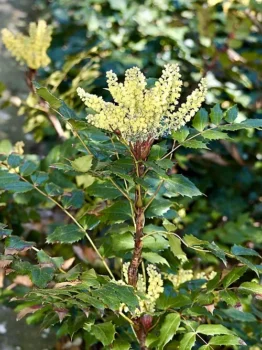
Cascade Barberry: The Perfect Native Groundcover for Shady Spots
If you’ve been searching for a tough, beautiful native plant that thrives in those tricky shaded corners of your garden, let me introduce you to Cascade barberry (Mahonia nervosa). This Pacific Northwest native is like that reliable friend who always shows up when you need them – low-maintenance, good-looking, and surprisingly versatile.
What is Cascade Barberry?
Cascade barberry goes by the botanical name Mahonia nervosa and belongs to a group of shrubs that know how to make themselves useful. This perennial evergreen stays relatively compact, typically reaching about 2 feet in both height and width at maturity. Don’t expect it to shoot up overnight though – this plant takes the slow and steady approach with a deliberately slow growth rate that makes it perfect for gardeners who prefer plants that stay put.
You might also find this plant listed under its synonyms, including Berberis nervosa, but don’t let the name confusion worry you – it’s the same wonderful plant no matter what you call it.
Where Does It Come From?
Cascade barberry is a true North American native, calling both Canada and the lower 48 states home. You’ll find it naturally growing across the Pacific Northwest, including British Columbia, California, Idaho, Oregon, and Washington. Interestingly, it also shows up in South Carolina, though this seems to be outside its typical range.
- Species observed
- No observations
Why Your Garden Will Love This Plant
Here’s where Cascade barberry really shines – it’s basically the Swiss Army knife of groundcover plants. Those glossy, dark green compound leaves look sophisticated year-round, and the plant puts on quite a show with its seasonal performances.
In mid-spring, clusters of bright yellow flowers emerge like tiny sunshine bursts, providing much-needed nectar for early pollinators when not much else is blooming. Come summer, these flowers transform into blue berries that birds absolutely love. And if that wasn’t enough, the foliage often takes on beautiful reddish-bronze tones in winter, keeping your garden interesting even in the cold months.
The rhizomatous growth form means this plant spreads gradually through underground stems, making it excellent for:
- Groundcover in shaded areas
- Understory planting in woodland gardens
- Foundation plantings that won’t outgrow their space
- Erosion control on slopes
- Creating natural-looking masses in native plant gardens
Growing Conditions: What Makes It Happy
The beauty of Cascade barberry lies in its adaptability to less-than-perfect conditions. This shade-tolerant plant actually prefers partial to full shade, making it perfect for those spots where other plants struggle.
Soil Requirements:
- Prefers coarse to medium-textured soils (avoid heavy clay)
- Needs good drainage
- Thrives in slightly acidic conditions (pH 5.0-7.5)
- Low fertility requirements – no need to fuss with rich soils
Water and Climate:
- Drought tolerant once established
- Low moisture requirements
- Hardy in USDA zones 5-9
- Can handle temperatures down to -18°F
- Needs at least 180 frost-free days
The plant has facultative upland status across different regions, meaning it usually prefers non-wetland conditions but can occasionally tolerate some moisture – basically, it’s flexible about water without being fussy.
Planting and Care Tips
Getting Cascade barberry established is refreshingly straightforward. Here’s your game plan:
Planting:
- Plant in fall or early spring
- Space plants 3-4 feet apart if creating a groundcover mass
- Available as container plants or bare root specimens
- Can be grown from seed, though it requires cold stratification
Ongoing Care:
- Water regularly the first year, then let nature take over
- Mulch around plants to retain moisture and suppress weeds
- Minimal pruning needed – this plant knows how to behave itself
- If damaged by fire, it has good resprout ability
- Long lifespan means you’re making a lasting investment
Wildlife and Pollinator Benefits
While the specific wildlife benefits aren’t fully documented, we do know that Cascade barberry pulls its weight in supporting local ecosystems. Those early spring flowers are pollinator magnets, providing crucial nectar when bees and other beneficial insects are just waking up from winter.
The blue berries that follow are a food source for birds, and the dense evergreen foliage provides year-round shelter for small wildlife. As a native plant, it supports the complex web of insects, birds, and other creatures that evolved alongside it.
The Bottom Line
Cascade barberry is one of those rare plants that asks for little but gives back generously. If you’re looking to create a low-maintenance, ecologically beneficial garden that looks good year-round, this Pacific Northwest native deserves serious consideration. It’s particularly valuable for those challenging shady spots where you want something more interesting than plain old hostas.
Just remember to source your plants responsibly from reputable native plant nurseries, and be patient with its slow growth rate. Good things come to those who wait, and Cascade barberry is definitely worth the wait.