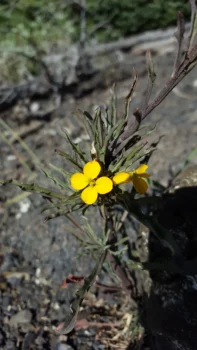
Cascade Wallflower: A Pacific Northwest Native Worth Knowing
If you’re looking for a cheerful, low-maintenance native plant that brings both color and ecological value to your Pacific Northwest garden, let me introduce you to the cascade wallflower (Erysimum arenicola). This delightful perennial might not be the most famous native on the block, but it’s definitely one worth getting to know – especially if you love plants that work hard without asking for much in return.
What Makes Cascade Wallflower Special?
Cascade wallflower is a true Pacific Northwest native, naturally occurring in British Columbia, Oregon, and Washington. As a member of the mustard family, this herbaceous perennial produces clusters of bright yellow to orange four-petaled flowers that bloom primarily in spring and early summer. The flowers sit atop sturdy stems above narrow, lance-shaped leaves, creating a compact and tidy appearance that gardeners absolutely love.
This native beauty grows naturally along the coastal regions of the Pacific Northwest, where it has adapted to sandy soils and variable moisture conditions. That coastal heritage makes it particularly valuable for gardeners dealing with challenging growing conditions.
- Species observed
- No observations
Why You’ll Want Cascade Wallflower in Your Garden
Here’s where cascade wallflower really shines – it’s the perfect plant for gardeners who want maximum impact with minimal fuss. Once established, this native perennial is remarkably drought tolerant, making it an excellent choice for water-wise gardening. The bright, cheerful flowers provide a lovely pop of color in spring when many other plants are just waking up from winter.
But the benefits go beyond just looking pretty. Cascade wallflower is a pollinator magnet, attracting bees, butterflies, and other beneficial insects to your garden. By choosing this native plant, you’re supporting local ecosystems and providing food sources that native wildlife has evolved alongside for thousands of years.
Perfect Garden Roles
Cascade wallflower works beautifully in several garden settings:
- Rock gardens: Its compact size and drought tolerance make it perfect for tucking between rocks
- Coastal gardens: Naturally adapted to coastal conditions, it handles salt spray and sandy soils with ease
- Native plant gardens: An authentic choice for Pacific Northwest native landscapes
- Ground cover: Forms attractive low mounds that help suppress weeds
- Border plants: Creates neat, colorful edges along pathways or garden beds
Growing Cascade Wallflower Successfully
The good news is that cascade wallflower is relatively easy to grow, especially if you can provide the right conditions from the start.
Ideal Growing Conditions
This native thrives in:
- Sunlight: Full sun is best, though it can tolerate some light shade
- Soil: Well-draining sandy or gravelly soils – heavy clay is not its friend
- Water: Moderate water during establishment, then quite drought tolerant
- Climate: Hardy in USDA zones 6-9, perfect for most Pacific Northwest gardens
Planting and Care Tips
Spring is the ideal time to plant cascade wallflower, giving it a full growing season to establish before winter. When planting, make sure your soil drains well – if water pools after rain, consider amending with sand or planting in a raised bed.
Water regularly during the first growing season to help establish a strong root system, but once established, you can cut back significantly on watering. In fact, overwatering is more likely to cause problems than underwatering with this drought-adapted native.
To keep your plants looking their best and encourage extended blooming, deadhead spent flowers regularly. This simple maintenance task can significantly extend the flowering period and keep your plants looking tidy.
A Note on Conservation
Cascade wallflower has a somewhat uncertain conservation status (listed as S4S5T3?), which essentially means more research is needed to fully understand its population stability. While this doesn’t mean it’s rare or endangered, it’s always wise to source your plants from reputable nurseries that propagate rather than wild-collect their stock.
The Bottom Line
If you’re gardening in the Pacific Northwest and looking for a reliable, beautiful native plant that supports local wildlife while requiring minimal care, cascade wallflower deserves serious consideration. It brings authentic regional character to your garden while supporting the pollinators and ecosystem that make our region so special.
Plus, there’s something deeply satisfying about growing a plant that truly belongs in your landscape – one that your local bees, butterflies, and other wildlife recognize as home.