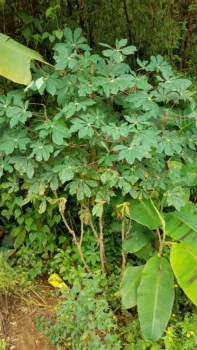
Growing Cassava: The Tropical Root Crop That’s More Than Just Food
If you’ve ever wandered through the tropical plant section of a nursery and spotted a tall, elegant plant with distinctive hand-shaped leaves, you might have encountered cassava (Manihot esculenta). Known by several names including manioc, tapioca, yuca, and bitter cassava, this perennial plant brings a distinctly tropical flair to gardens while offering the bonus of edible roots.
What Exactly Is Cassava?
Cassava is a fast-growing perennial that can reach up to 10 feet tall with a single-stem growth form. Its most striking feature is its palmate foliage – leaves that spread out like fingers from a central point, creating an almost architectural look in the landscape. The plant maintains its green foliage year-round in suitable climates, with dense summer coverage that becomes more moderate in winter.
Originally native to South America, cassava is now a non-native species that has been introduced and established itself in various parts of the United States, including Alabama, Florida, Hawaii, Mississippi, Texas, and several US territories like Puerto Rico and the Virgin Islands.
- Species observed
- No observations
The Appeal of Cassava in Your Garden
There are several reasons why gardeners might consider adding cassava to their landscape:
- Tropical aesthetic: The distinctive foliage creates an instant tropical vibe
- Fast growth: With a rapid growth rate, it quickly fills space and provides structure
- Edible landscaping: The roots are edible (though require proper preparation)
- Year-round interest: Active growth period extends throughout the year in suitable climates
- Low maintenance: Once established, it’s relatively easy to care for
Where Cassava Fits in Your Landscape
Cassava works well as a specimen plant or as part of a tropical-themed garden. Its semi-erect growth habit and substantial size make it an excellent choice for:
- Creating privacy screens or natural barriers
- Adding height and structure to garden beds
- Tropical and subtropical landscape designs
- Edible landscaping projects
- Container growing in cooler climates (though you’ll need a large pot!)
Growing Conditions and Care
Cassava is definitely a warm-weather lover. Here’s what it needs to thrive:
Climate Requirements:
- USDA hardiness zones 9-11
- Requires 365 frost-free days minimum
- Minimum temperature tolerance around 17°F
- Cannot tolerate shade – needs full sun
Soil Preferences:
- Adapts to fine and medium-textured soils
- Prefers acidic conditions (pH 5.0-5.5)
- Needs well-draining soil with low anaerobic tolerance
- Benefits from high fertility requirements
Water and Maintenance:
- Medium moisture use with low drought tolerance
- Requires 60-80 inches of precipitation annually
- Has low salt tolerance, so avoid coastal areas with salt spray
- No fire tolerance – keep away from fire-prone areas
Planting and Propagation
Getting cassava started in your garden is relatively straightforward:
- Propagation methods: Can be grown from seed, cuttings, or bare root plants
- Availability: Routinely available from nurseries specializing in tropical plants
- Planting density: Space plants 1,700-2,700 per acre (or about 6-8 feet apart for home gardens)
- Root depth: Ensure soil depth of at least 24 inches for proper root development
Important Considerations
Safety Note: Cassava has slight toxicity, particularly in the raw roots, which contain compounds that can be harmful if not properly processed. If you’re growing it for food, research proper preparation methods.
Wildlife and Pollinators: While cassava produces small green flowers, they’re not particularly conspicuous or attractive to pollinators. The plant offers limited wildlife benefits compared to native alternatives.
Native Alternatives to Consider
Since cassava is non-native to the United States, you might want to consider these native alternatives that offer similar tropical appeal:
- Pawpaw (Asimina triloba) for temperate regions
- Firebush (Hamelia patens) for subtropical areas
- Native hibiscus species for tropical landscaping
- Coontie (Zamia integrifolia) for Florida gardens
The Bottom Line
Cassava can be an interesting addition to warm-climate gardens, offering rapid growth and distinctive tropical foliage. While it’s not native to the United States, it’s not currently listed as invasive either. If you’re drawn to its unique appearance and have the right growing conditions, cassava can work well in tropical landscape designs or edible gardens. Just remember to research proper handling if you plan to harvest the roots, and consider incorporating native plants alongside it to support local ecosystems.
Whether you call it cassava, manioc, or yuca, this versatile plant brings a touch of the tropics wherever it grows – just make sure you can provide the warm, sunny conditions it craves!