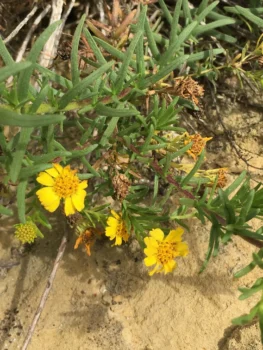
Catalina Tarweed: A Rare Island Gem for Your Native Garden
Meet Catalina tarweed (Deinandra clementina), a charming and exceptionally rare native shrub that brings a piece of California’s island magic to your garden. This little-known gem is as special as it is beautiful, but there’s an important conservation story behind its sunny yellow blooms.
What Makes Catalina Tarweed Special
Catalina tarweed is what botanists call an endemic species – it exists naturally in only one place on Earth: Santa Catalina Island off the coast of Southern California. This perennial shrub produces cheerful, daisy-like yellow flowers and aromatic foliage that adds both visual appeal and delightful fragrance to your landscape.
You might also see this plant listed under its former scientific name, Hemizonia clementina, in older gardening references.
Where Does Catalina Tarweed Come From
This remarkable plant calls only California home, specifically the unique ecosystem of Santa Catalina Island. Its extremely limited natural range makes it a true botanical treasure.
- Species observed
- No observations
A Conservation Success Story in Your Garden
Here’s where things get serious for a moment. Catalina tarweed has a Global Conservation Status of S3, meaning it’s considered vulnerable in the wild. With only 21 to 100 known occurrences and an estimated 3,000 to 10,000 individuals remaining, this plant is genuinely rare.
The good news? You can actually help with conservation efforts by growing this plant – but only if you source it responsibly from reputable native plant nurseries that propagate from ethical seed sources. Never collect from wild populations!
Garden Appeal and Design Role
Despite its rarity, Catalina tarweed makes an excellent garden plant for the right conditions. This multi-stemmed woody shrub typically stays manageable in size, usually growing less than 13-16 feet tall, though most garden specimens remain much smaller and more compact.
It’s perfect for:
- Native California plant gardens
- Mediterranean-style landscapes
- Drought-tolerant xeriscapes
- Accent plantings where you want something truly unique
Pollinator Paradise
Like many members of the sunflower family, Catalina tarweed is a pollinator magnet. Its bright yellow flowers attract native bees, butterflies, and other beneficial insects, making it a valuable addition to any wildlife-friendly garden.
Growing Conditions and Care
Catalina tarweed thrives in USDA hardiness zones 9-11, making it suitable for coastal and Southern California gardens. Here’s what this island native needs to flourish:
- Sunlight: Full sun exposure
- Soil: Well-draining soil is absolutely essential
- Water: Drought tolerant once established; minimal summer water needed
- Climate: Prefers Mediterranean conditions with mild, wet winters and dry summers
Planting and Care Tips
Success with Catalina tarweed comes down to mimicking its native island conditions:
- Plant in fall or early spring when natural rains will help establishment
- Ensure excellent drainage – this plant hates wet feet
- Water regularly the first year, then reduce to minimal summer irrigation
- Prune lightly after flowering to maintain shape
- Mulch around the base to suppress weeds and retain moisture
Should You Plant Catalina Tarweed?
If you live in the right climate zone and can source this plant responsibly, absolutely! Growing Catalina tarweed connects you to California’s unique botanical heritage while supporting conservation efforts for this vulnerable species.
Just remember: always purchase from reputable native plant nurseries that ethically propagate their stock. By choosing responsibly sourced plants, you’re helping ensure this rare beauty continues to thrive both in gardens and in its wild island home.
Your garden can become part of the conservation story – and gain a truly special plant that few gardeners will ever encounter.