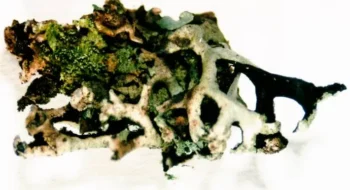
Catawba Everniastrum Lichen: A Natural Air Quality Indicator in Your Garden
If you’ve ever noticed grayish-green, leafy growths attached to tree bark or rocks in your garden, you might have encountered the fascinating world of lichens. One such species you might spot in North American landscapes is the Catawba everniastrum lichen, scientifically known as Everniastrum catawbiense. While you can’t plant this curious organism like your typical garden flowers, understanding what it is and what its presence means can give you valuable insights into your garden’s ecosystem health.
What Exactly Is Catawba Everniastrum Lichen?
Catawba everniastrum lichen isn’t actually a plant at all – it’s a remarkable partnership between a fungus and algae (or cyanobacteria) living together in perfect harmony. This cooperative relationship, called symbiosis, creates what appears to be a single organism that can survive in conditions where neither partner could thrive alone.
This native North American species typically appears as a grayish-green to bluish-gray, leaf-like growth with distinctive lobed edges. It’s what scientists call a foliose lichen, meaning it has a flat, leafy appearance rather than being crusty or shrub-like.
Where You’ll Find This Lichen
Catawba everniastrum lichen is primarily found in the southeastern United States, with a strong presence throughout the Appalachian region. You’re most likely to spot it growing on the bark of trees or occasionally on rocks in areas with relatively clean air.
Is It Beneficial to Your Garden?
While you can’t deliberately cultivate Catawba everniastrum lichen, its presence in your garden is actually a wonderful sign! Here’s why this lichen can be considered a garden friend:
- Air quality indicator: Lichens are notoriously sensitive to air pollution, so finding them growing naturally means your garden enjoys relatively clean air
- Ecosystem health marker: Their presence suggests a balanced, healthy environment
- Wildlife habitat: Many small creatures use lichens for shelter and nesting material
- Natural beauty: They add subtle, natural texture and color to tree bark and stone surfaces
How to Identify Catawba Everniastrum Lichen
Spotting this lichen in your garden requires looking closely at tree bark, particularly on older trees. Here are the key identification features:
- Color: Grayish-green to bluish-gray appearance
- Shape: Flat, leafy (foliose) with distinctly lobed edges
- Texture: Smooth to slightly wrinkled surface
- Location: Typically found on tree bark, occasionally on rocks
- Size: Individual lobes are usually small, but colonies can spread across several inches of bark
What If You Find It (Or Don’t Find It)?
If you discover Catawba everniastrum lichen in your garden, congratulations! This means you’re maintaining a healthy environment that supports these sensitive organisms. Simply leave it alone – lichens grow incredibly slowly and are easily damaged by disturbance.
If you don’t see any lichens in your garden, don’t worry. Their absence doesn’t necessarily indicate a problem, as they can be quite particular about their growing conditions and may simply not have found suitable spots to establish themselves yet.
Supporting Lichen-Friendly Conditions
While you can’t plant lichens, you can create conditions that might encourage their natural establishment:
- Avoid using pesticides and chemicals that could affect air quality
- Maintain mature trees with textured bark
- Keep some areas of your garden relatively undisturbed
- Consider the overall health of your local ecosystem
Remember, lichens like Catawba everniastrum are slow-growing pioneers that may take years to establish naturally. Their presence is always a gift rather than something you can demand from your garden. Think of them as nature’s own seal of approval for the healthy environment you’re creating!