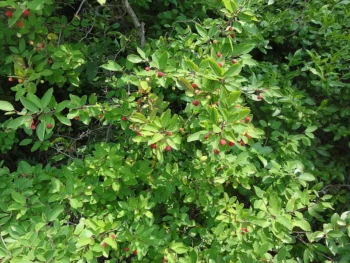
Catberry: The Perfect Native Shrub for Your Wetland Garden
If you’ve been searching for a native shrub that thrives in those soggy spots of your yard where other plants fear to tread, let me introduce you to catberry (Ilex mucronata). This unassuming little gem might not win any beauty contests at first glance, but it’s exactly what your wetland garden has been missing.
What Is Catberry?
Catberry, scientifically known as Ilex mucronata, is a deciduous shrub that belongs to the holly family. You might also see it listed under its former botanical names, Nemopanthus mucronatus or Vaccinium mucronatum, but don’t let the name changes confuse you – it’s the same wonderful plant. This perennial woody shrub typically grows as a multi-stemmed plant reaching 4-8 feet in height and width, though it can occasionally stretch taller under ideal conditions.
Where Does Catberry Call Home?
This hardy native has quite an impressive range across eastern North America. Catberry naturally grows throughout southeastern Canada, including New Brunswick, Nova Scotia, Ontario, Prince Edward Island, Quebec, and Newfoundland, as well as St. Pierre and Miquelon. In the United States, you’ll find it thriving from Maine down through the Great Lakes region, including states like Connecticut, Illinois, Indiana, Maryland, Massachusetts, Michigan, Minnesota, New Hampshire, New Jersey, New York, Ohio, Pennsylvania, Rhode Island, Vermont, West Virginia, and Wisconsin.
- Species observed
- No observations
Why Your Garden Needs This Wetland Wonder
Here’s where catberry really shines – it’s what botanists call an obligate wetland plant across all regions where it grows. This means it almost always occurs in wetlands and absolutely loves those constantly moist, boggy conditions that make most gardeners throw up their hands in despair.
The aesthetic appeal might be subtle, but it’s definitely there. In spring, catberry produces small, inconspicuous flowers that may not stop traffic but provide valuable nectar for various small insects and flies. The real show comes later when female plants develop bright red berries (you’ll need both male and female plants for berry production), and the foliage turns a lovely yellow in fall.
Perfect for These Garden Situations
Catberry is absolutely perfect for:
- Rain gardens and bioswales
- Bog gardens and wetland restoration projects
- Naturalized landscapes and wildlife habitat areas
- Problem areas with consistently wet soil
- Understory plantings in partially shaded wet areas
Growing Conditions and Care
If you’re ready to welcome catberry into your garden, here’s what it needs to thrive:
Hardiness: This tough little shrub handles cold beautifully, thriving in USDA hardiness zones 3-6.
Soil Requirements: Catberry demands acidic soil that stays consistently moist to wet. Think bog-like conditions – if your soil stays soggy after heavy rains while other areas dry out, that’s catberry’s sweet spot.
Light Conditions: It’s quite flexible with light, growing well in partial shade to full sun, though it tends to prefer some protection from intense afternoon sun.
Planting Tips: Spring is the best time to plant catberry. Dig a hole as deep as the root ball but twice as wide, and don’t worry about improving drainage – this plant actually wants to keep its feet wet! If you want those attractive red berries, make sure to plant both male and female plants relatively close to each other.
The Wildlife Connection
While the specific wildlife benefits aren’t fully documented, as a native wetland shrub, catberry likely provides food and habitat for various birds and small mammals. The berries, when present, offer food sources, and the dense branching provides nesting sites and cover for wildlife.
Is Catberry Right for Your Garden?
Catberry isn’t for everyone, and that’s perfectly okay! You should definitely plant it if you have consistently wet, acidic soil and want to work with nature rather than fight it. It’s also an excellent choice if you’re passionate about native plants and creating wildlife habitat.
However, if you’re looking for a showstopping ornamental shrub or have well-drained soil, catberry probably isn’t your best bet. This is a plant that thrives in very specific conditions and offers subtle rather than dramatic beauty.
For gardeners dealing with those challenging wet spots, catberry represents an opportunity to transform a problem area into a thriving part of your landscape while supporting native ecosystems. Sometimes the most rewarding plants are the ones that teach us to appreciate nature’s quieter moments.