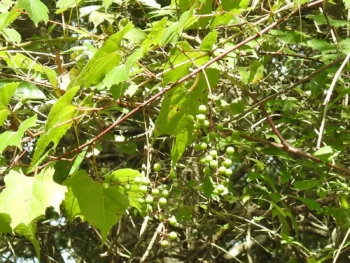
Catbird Grape: A Native Climbing Vine That Birds Absolutely Love
If you’re looking for a native vine that can transform a bare fence into a wildlife magnet, meet the catbird grape (Vitis palmata). This charming climbing vine gets its delightful name from one of its biggest fans—the catbird, which goes absolutely bonkers for its small, dark grapes. Also known by the synonym Vitis rubra, this perennial vine is a fantastic choice for gardeners who want to create habitat while adding natural beauty to their landscape.
Where Does Catbird Grape Call Home?
Catbird grape is native to the lower 48 states, with a natural range spanning across the southeastern and south-central United States. You’ll find this vine thriving from Alabama and Florida up through Connecticut, and west to Texas and Oklahoma. Its distribution includes Alabama, Arkansas, Connecticut, Florida, Georgia, Illinois, Indiana, Kentucky, Louisiana, Mississippi, Missouri, New Jersey, Oklahoma, Tennessee, and Texas.
- Species observed
- No observations
What Makes This Vine Special?
This twining, climbing vine can reach impressive heights of up to 30 feet, making it perfect for covering large structures or creating natural screens. The catbird grape features distinctive palmately lobed leaves (think of a hand with fingers spread out) that create a fine texture in the landscape. During late spring, it produces small white flowers that, while not particularly showy, are beloved by bees and other pollinators.
The real show begins in summer and continues through fall when the vine produces abundant clusters of small black grapes. These fruits are not only conspicuous and attractive, but they’re also a crucial food source for wildlife. The foliage provides nice fall color, adding seasonal interest to your garden before the leaves drop for winter.
Why Your Garden (and Local Wildlife) Will Thank You
Catbird grape is like setting up a five-star restaurant for your local bird population. The small black grapes are particularly favored by catbirds (hence the name!), but many other bird species enjoy them as well. The flowers attract bees and small pollinators during blooming season, making this vine a true wildlife multitasker.
From a design perspective, this vine excels at:
- Creating natural privacy screens
- Covering unsightly structures like old fences or utility areas
- Adding vertical interest to rain gardens and wetland plantings
- Naturalizing areas where you want a wild look
- Providing erosion control on slopes
Growing Conditions: Where Catbird Grape Thrives
One of the most interesting things about catbird grape is its relationship with water. Depending on your region, it has different wetland preferences. In the Midwest and Northcentral/Northeast regions, it’s considered an obligate wetland plant, meaning it almost always occurs in wetlands. In other areas like the Atlantic and Gulf Coastal Plain, Eastern Mountains and Piedmont, and Great Plains, it’s a facultative wetland plant, usually found in wet areas but occasionally in drier sites.
Here’s what catbird grape needs to thrive:
- Hardiness zones: 6-9
- Soil: Adaptable to coarse and medium-textured soils, but not fine-textured soils
- pH: Slightly acidic to neutral (5.5-7.0)
- Moisture: Medium to high moisture needs; low drought tolerance
- Sun exposure: Intermediate shade tolerance, so it can handle partial sun to partial shade
- Temperature: Can handle temperatures down to -13°F
Planting and Care Tips
Getting catbird grape established in your garden is relatively straightforward, though patience is key. This vine has a moderate growth rate and can live for many years once established.
Planting:
- Seeds require cold stratification, so fall planting works well for natural stratification over winter
- You can also propagate by cuttings, bare root, or container plants
- Plant in spring after the last frost, ensuring at least 165 frost-free days ahead
- Space plants 170-300 per acre if doing large-scale plantings
Care:
- Provide consistent moisture, especially during establishment
- Mulch around the base to retain soil moisture
- Install sturdy support structures—this vine can get heavy!
- Minimal fertilization needed; medium fertility requirements
- Prune in late winter if needed to control size or shape
Is Catbird Grape Right for Your Garden?
Catbird grape is perfect for gardeners who want to create wildlife habitat while adding natural beauty to their landscape. It’s ideal for rain gardens, native plant gardens, naturalized areas, and anywhere you want to attract birds and pollinators. The vine works especially well in areas where you have consistent moisture or want to create a wild corner of your garden.
Keep in mind that this is a vigorous climber that will need adequate space and strong support. It’s not the best choice for small, formal gardens or areas where you need precise control over plant size and shape. However, if you have the space and want to create habitat for local wildlife while covering a fence, arbor, or unsightly structure, catbird grape could be exactly what you’re looking for.
With its wildlife benefits, native status, and relatively easy care requirements, catbird grape offers an excellent way to garden in harmony with nature while creating a landscape that’s both beautiful and beneficial to local ecosystems.