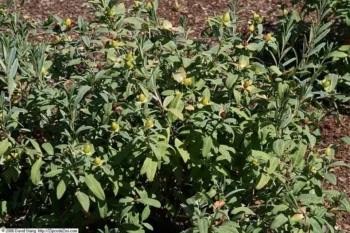
Cedarglade St. Johnswort: A Cheerful Native Shrub for Challenging Spots
Meet cedarglade St. Johnswort (Hypericum frondosum), a delightfully resilient native shrub that brings sunshine to your garden with its bright yellow blooms. This unassuming perennial proves that sometimes the most beautiful plants are the ones that ask for the least fuss. If you’re tired of babying high-maintenance plants, this cheerful native might just become your new gardening best friend.
What Makes Cedarglade St. Johnswort Special?
Cedarglade St. Johnswort is a multi-stemmed woody shrub that typically stays under 13-16 feet tall, making it perfectly sized for most home landscapes. You might also see it listed under its former botanical names, Hypericum aureum or Hypericum splendens, but rest assured – they’re all the same wonderful plant.
This native beauty produces clusters of bright yellow, five-petaled flowers that seem to glow in the summer sun. The blooms are complemented by attractive blue-green foliage and a naturally compact growth habit that rarely needs much intervention from you.
Where Does It Call Home?
As a true native of the lower 48 states, cedarglade St. Johnswort has made itself at home across the Southeast and beyond. You’ll find wild populations thriving in Alabama, Connecticut, Florida, Georgia, Indiana, Kentucky, Louisiana, Massachusetts, Mississippi, New York, North Carolina, South Carolina, Tennessee, Texas, and Virginia.
- Species observed
- No observations
Originally adapted to the challenging conditions of cedar glades and rocky outcrops, this plant has learned to thrive where others struggle – a trait that makes it incredibly valuable in home gardens.
Why Your Garden (and Local Wildlife) Will Love It
Here’s where cedarglade St. Johnswort really shines: it’s practically a one-stop shop for pollinators. Those cheerful yellow flowers aren’t just pretty to look at – they’re buzzing with activity during bloom season. Bees, butterflies, and other beneficial insects flock to the abundant nectar and pollen, making your garden a more vibrant ecosystem.
From a design perspective, this shrub is incredibly versatile. It works beautifully as:
- A specimen plant in rock gardens
- Part of a native plant collection
- A low-maintenance addition to naturalized areas
- An anchor plant in drought-tolerant landscapes
- A cheerful addition to wildlife gardens
Growing Conditions: Less is More
One of the best things about cedarglade St. Johnswort is how little it demands from you. This plant thrives in USDA hardiness zones 5-9, giving most gardeners the opportunity to enjoy its beauty.
It prefers:
- Full sun to partial shade (though more sun means more flowers)
- Well-drained soils – it absolutely hates wet feet
- Average to poor soils (rich soil can actually make it too lush)
- Rocky or alkaline conditions where other plants struggle
Once established, this shrub is remarkably drought tolerant, making it perfect for those challenging spots in your garden where other plants just won’t cooperate.
Planting and Care: Keep It Simple
The beauty of cedarglade St. Johnswort lies in its simplicity. Plant it in spring or fall when temperatures are moderate, give it a good drink to get established, and then step back and let it do its thing.
Here are the basics:
- Choose a spot with good drainage – this is non-negotiable
- Water regularly the first year, then only during extended dry spells
- Resist the urge to fertilize heavily; it doesn’t need it
- Prune lightly in late winter if you want to maintain a specific shape
- Avoid overwatering – seriously, this plant prefers to stay on the dry side
The Bottom Line
Cedarglade St. Johnswort is the kind of plant that makes gardening feel effortless. It’s native, low-maintenance, beautiful, and beneficial to local wildlife – what more could you ask for? Whether you’re dealing with a challenging rocky slope, want to create a pollinator haven, or simply need a reliable shrub that won’t demand constant attention, this cheerful native delivers.
In a world of high-maintenance garden divas, cedarglade St. Johnswort is refreshingly down-to-earth. Plant it once, enjoy it for years, and feel good knowing you’re supporting native ecosystems while adding reliable beauty to your landscape.