Chaffweed: The Tiny Native That Packs a Punch in Naturalized Gardens
If you’ve ever wondered about those impossibly tiny flowers dotting the edges of ponds or hiding in the damp corners of your garden, you might have encountered chaffweed (Anagallis minima). This diminutive annual native plant may not win any beauty contests, but it plays an important role in North American ecosystems and deserves a spot in the right garden setting.
What is Chaffweed?
Chaffweed is a small annual forb – essentially a non-woody plant that completes its entire life cycle in one growing season. Also known by its botanical synonyms Centunculus minimus and Lysimachia minima, this little powerhouse belongs to a group of plants that lack significant woody tissue but make up for it with their adaptability and ecological value.
As a native species, chaffweed naturally occurs across an impressive range, growing in states from Alberta and British Columbia in Canada all the way down to Florida and Texas in the southern United States. You can find it thriving in Alabama, Arizona, Arkansas, California, Colorado, Delaware, Georgia, Idaho, Illinois, Indiana, Kansas, Kentucky, Louisiana, Maryland, Minnesota, Mississippi, Missouri, Montana, Nebraska, New Mexico, New York, North Dakota, Ohio, Oklahoma, Oregon, South Carolina, South Dakota, Tennessee, Virginia, Washington, West Virginia, and Wyoming.
- Species observed
- No observations
Why Consider Chaffweed for Your Garden?
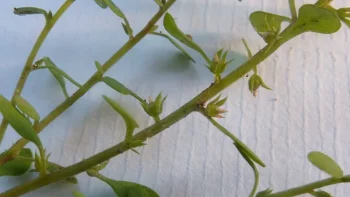
Let’s be honest – chaffweed isn’t going to be the star of your flower border. Its tiny white to pale pink flowers measure just 1-2 millimeters across, and the whole plant rarely grows taller than a few inches. However, this unassuming native offers several compelling reasons to include it in the right garden setting:
- True native status across most of North America
- Excellent for naturalizing wetland edges and moist areas
- Provides food and habitat for small pollinators like tiny flies and beetles
- Requires virtually no maintenance once established
- Self-seeds readily in appropriate conditions
- Helps complete the ecosystem puzzle in native plant gardens
Where Does Chaffweed Thrive?
Understanding chaffweed’s wetland preferences is key to growing it successfully. Across most regions – including the Arid West, Atlantic and Gulf Coastal Plain, Eastern Mountains and Piedmont, Great Plains, Midwest, and Western Mountains, Valleys, and Coast – it has a Facultative Wetland status. This means it usually occurs in wetlands but can also pop up in non-wetland areas. Interestingly, in the Northcentral and Northeast regions, it’s classified as Facultative Upland, typically preferring drier sites but still tolerating wetland conditions.
Growing Chaffweed Successfully
The beauty of chaffweed lies in its simplicity. This annual thrives in USDA hardiness zones 3-9, making it suitable for most North American gardens. Here’s how to give it the best chance of success:
Ideal Growing Conditions
- Moisture: Prefers consistently moist to wet soils
- Light: Partial sun to partial shade
- Soil: Tolerates various soil types, but performs best in organic-rich, moisture-retentive soils
- pH: Adaptable to different pH levels
Planting and Care Tips
- Seeds can be direct sown in fall or early spring
- Barely cover seeds with soil – they need light to germinate
- Keep soil consistently moist during germination and establishment
- Once established, minimal care is needed
- Allow plants to self-seed for natural colonization
- Avoid fertilizing – this native prefers lean conditions
Is Chaffweed Right for Your Garden?
Chaffweed works best in specialized garden settings rather than traditional ornamental borders. Consider it for:
- Native plant gardens focused on local ecosystems
- Wildlife gardens supporting small pollinators
- Naturalized wetland areas or rain gardens
- Pond margins and stream edges
- Areas where you want low-maintenance, native ground cover
However, chaffweed might not be the best choice if you’re looking for:
- Showy flowering displays
- Formal garden settings
- Areas with consistently dry conditions
- High-traffic zones where delicate plants might be damaged
The Bottom Line
While chaffweed may never grace the cover of a gardening magazine, this humble native plant offers something increasingly valuable in our modern landscapes: authentic ecological function. By providing this unassuming annual with the moist conditions it craves, you’re not just growing a plant – you’re supporting the complex web of small creatures that depend on natives like chaffweed for survival. Sometimes the most important garden residents are the ones you barely notice.