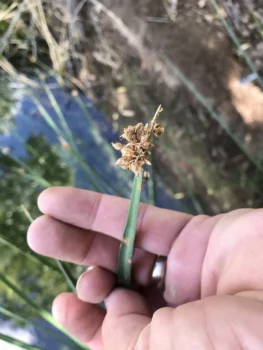
Chairmaker’s Bulrush: The Unsung Hero of Wetland Gardens
If you’re looking for a native plant that’s as practical as it is unpretentious, let me introduce you to chairmaker’s bulrush (Schoenoplectus americanus). This grass-like perennial might not win any beauty contests with flashy flowers, but it’s the reliable workhorse your wetland garden has been waiting for.
What Exactly Is Chairmaker’s Bulrush?
Chairmaker’s bulrush is a sedge – part of that wonderful family of grass-like plants that includes sedges, rushes, and their cousins. You might also know it by its historical synonym Scirpus americanus, though botanists have since moved it to the Schoenoplectus genus. This perennial forms dense colonies of upright, cylindrical green stems that have a distinctly architectural quality.
The common name chairmaker’s bulrush hints at its traditional use – Indigenous peoples and early settlers used the strong, flexible stems for weaving baskets and chair seats. Pretty cool that you can grow your own crafting supplies, right?
Where Does It Call Home?
Talk about a plant with wanderlust! Chairmaker’s bulrush is native to an impressively wide range across North America. You’ll find it naturally occurring from Alaska down through Canada and across the lower 48 states, and it even extends into Puerto Rico and the U.S. Virgin Islands. It grows in states as diverse as Alabama, California, Montana, Florida, and just about everywhere in between.
- Species observed
- No observations
Why Your Garden Will Love This Plant
Here’s where chairmaker’s bulrush really shines – it’s an obligate wetland species, meaning it almost always occurs in wetlands across every region where it grows. This makes it absolutely perfect for:
- Rain gardens that need to handle seasonal flooding
- Pond margins and water garden edges
- Wetland restoration projects
- Erosion control along waterways
- Native plant gardens focusing on authentic local ecosystems
The plant’s minimalist aesthetic – think clean lines and architectural form – works beautifully in contemporary landscape designs. It’s not about showy blooms; it’s about structure, texture, and ecological function.
Growing Chairmaker’s Bulrush Successfully
One of the best things about this plant is how accommodating it is. With a USDA hardiness range from zones 3 through 11, it can handle everything from frigid Alaskan winters to subtropical heat.
Growing Conditions:
- Light: Full sun to partial shade (though it prefers plenty of sun)
- Soil: Consistently moist to saturated soils – this plant loves having wet feet
- Water: Tolerates seasonal flooding and standing water
- Maintenance: Minimal once established
The key to success is understanding that this plant needs consistent moisture. Don’t try to grow it in well-drained garden beds – it’ll sulk and likely fail. Instead, give it that boggy spot in your yard that other plants struggle with, and watch it thrive.
Planting and Care Tips
Chairmaker’s bulrush spreads via underground rhizomes, so once you get it established, it’ll gradually form those attractive dense colonies. This spreading habit makes it excellent for erosion control, but keep it in mind for smaller gardens where you might want to contain it.
Plant it in spring when the soil is workable, and make sure to keep the area consistently moist during establishment. Once it’s settled in (usually by the second growing season), it’s remarkably low-maintenance.
Wildlife and Ecological Benefits
While chairmaker’s bulrush is wind-pollinated rather than insect-pollinated, don’t underestimate its ecological value. The dense colonies provide excellent cover and nesting sites for wetland birds, and the seeds feed waterfowl and other wildlife. It’s also a host plant for several butterfly and moth species.
Plus, like all wetland plants, it helps filter water and prevent erosion – making it a true environmental ally in your garden.
Is Chairmaker’s Bulrush Right for Your Garden?
This plant is perfect for you if you have consistently moist to wet areas in your landscape and want a low-maintenance native that provides ecological benefits. It’s ideal for naturalistic gardens, restoration projects, or anywhere you need a reliable wetland species.
However, if you’re working with well-drained soils or looking for showy flowers, you might want to consider other native options better suited to those conditions.
Chairmaker’s bulrush might not be the flashiest plant in the native garden catalog, but it’s definitely one of the most dependable. Sometimes the best garden heroes are the quiet ones that just get the job done – and do it beautifully.