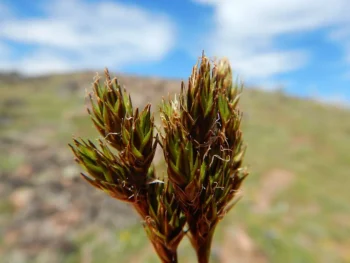
Chamisso Sedge: A Hardy Native Grass for Western Gardens
If you’re looking for a tough, adaptable native plant that can handle whatever Mother Nature throws its way, let me introduce you to chamisso sedge (Carex pachystachya). This unassuming but incredibly resilient sedge might not win any beauty contests, but it’s the kind of reliable performer that every western garden needs.
What is Chamisso Sedge?
Chamisso sedge is a perennial grass-like plant that’s native to western North America. Despite its common name calling it a sedge, it’s actually part of the broader group of graminoids – plants that include grasses, sedges, rushes, and other grass-like species. This hardy little plant forms dense tufts of narrow, green leaves that arch gracefully and can reach up to 3.5 feet tall.
Don’t expect showy flowers from this plant – chamisso sedge produces small, inconspicuous reddish-brown flower spikes in late spring. The real appeal lies in its practical benefits and year-round texture.
Where Does Chamisso Sedge Grow Naturally?
This sedge is a true western native, naturally occurring across an impressive range that includes Alaska, western Canada (Alberta, British Columbia, Saskatchewan, and Yukon), and much of the western United States. You’ll find it growing wild in California, Colorado, Idaho, Montana, Nevada, Oregon, Utah, Washington, and Wyoming.
- Species observed
- No observations
Its native range tells you a lot about this plant’s adaptability – from the frigid temperatures of Alaska to the arid conditions of Nevada, chamisso sedge has learned to thrive in diverse conditions.
Why Plant Chamisso Sedge in Your Garden?
Here are the compelling reasons to consider this native sedge:
- Incredible drought tolerance: Once established, this plant can handle dry conditions with minimal water
- Temperature tough: Hardy to temperatures as low as -38°F, making it suitable for USDA zones 3-8
- Flexible water needs: Can grow in both wetland and upland conditions, making it perfect for rain gardens or dry slopes
- Low maintenance: Requires minimal fertilizer and has few pest problems
- Erosion control: The rhizomatous growth form helps stabilize soil
- Wildlife value: Seeds provide food for birds and small mammals
- Year-round interest: Provides texture and movement throughout the growing season
Perfect Garden Situations
Chamisso sedge shines in several garden scenarios:
- Native plant gardens and restoration projects
- Water-wise landscapes and xeriscaping
- Rain gardens and bioswales
- Slope stabilization and erosion control
- Mountain and alpine-style gardens
- Natural meadow plantings
- Background plantings for more colorful natives
Growing Conditions and Care
One of the best things about chamisso sedge is how accommodating it is:
Soil: Prefers medium to fine-textured soils but is quite adaptable. It can handle pH levels from 5.8 to 7.5 and doesn’t need rich, fertile soil – in fact, it prefers low-fertility conditions.
Water: This is where the plant really shows its flexibility. It can thrive in both wet and dry conditions, though it uses a medium amount of water when available. Annual precipitation can range from 18 to 60 inches.
Light: Tolerates shade but also grows well in full sun to partial shade conditions.
Temperature: Needs at least 140 frost-free days and can handle temperatures down to -38°F.
Planting and Care Tips
Getting chamisso sedge established in your garden is relatively straightforward:
- Planting: Can be propagated by seed, bare root, or sprigs. Plant 11,000-18,000 plants per acre for large-scale installations
- Timing: Plant in spring for best establishment
- Spacing: Allow room for the moderate growth rate and eventual 3.5-foot height
- Watering: Water regularly the first year to establish roots, then reduce watering as the plant becomes drought-tolerant
- Maintenance: Cut back old foliage in late winter before new growth begins. Division is possible but not necessary
- Fertilizing: Generally not needed – this plant prefers lean conditions
Potential Drawbacks to Consider
While chamisso sedge has many benefits, there are a few things to keep in mind:
- Limited commercial availability – you may need to source seeds or plants from specialized native plant nurseries
- Slow initial establishment and low seedling vigor
- Not particularly showy – better as a supporting player than a star attraction
- Seeds have low abundance and don’t persist long
The Bottom Line
Chamisso sedge might not be the most glamorous plant in your garden, but it’s definitely one of the most dependable. If you’re creating a low-water landscape, need erosion control, or want to support local wildlife with native plants, this hardy sedge deserves serious consideration. Its adaptability to various growing conditions and minimal care requirements make it an excellent choice for gardeners who want maximum benefit with minimum fuss.
Just remember that this is truly a plant for western gardeners – its native range and growing requirements are specifically suited to western North American conditions. For gardeners in this region, chamisso sedge represents the kind of reliable, low-maintenance native that forms the backbone of sustainable landscaping.