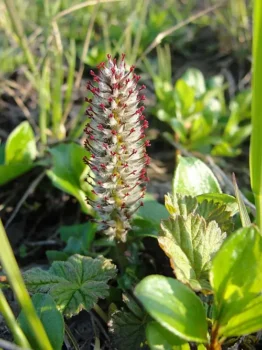
Chamisso’s Willow: The Hardy Northern Native That Thrives Where Others Fear to Grow
If you’re gardening in one of the coldest corners of North America and feeling like your plant options are limited, let me introduce you to a tough little character that laughs in the face of arctic winters. Chamisso’s willow (Salix chamissonis) might not have the flashiest name, but this scrappy native shrub has earned its place as one of the most resilient plants you can grow in extreme northern climates.
What Makes Chamisso’s Willow Special?
This perennial shrub is a true northerner, native to Alaska, Yukon Territory, and the Northwest Territories of Canada. Unlike its tree-sized willow cousins, Chamisso’s willow stays relatively compact, typically reaching 4-5 meters (13-16 feet) in height with multiple stems emerging from the ground. It’s perfectly adapted to life in the far north, where easy to grow plants are often hard to come by.
Where Does It Call Home?
Chamisso’s willow has carved out its niche in some of the most challenging growing conditions on the continent. You’ll find this hardy native thriving across Alaska, extending into Canada’s Yukon Territory and Northwest Territories. It’s a plant that has learned to not just survive, but flourish in regions where the growing season is short and winter temperatures can be brutally cold.
- Species observed
- No observations
Why Your Garden (Might) Want This Willow
Before you get too excited, let’s be honest about who this plant is for. If you’re gardening in USDA hardiness zones 1-4, Chamisso’s willow could be exactly what you’ve been looking for. Here’s why cold-climate gardeners love it:
- Extreme cold tolerance: This plant doesn’t just survive arctic conditions—it thrives in them
- Early pollinator support: Its spring catkins provide crucial nectar when few other flowers are blooming
- Low maintenance: Once established, it pretty much takes care of itself
- Erosion control: Great for stabilizing slopes and wet areas
- Native wildlife support: Supports local ecosystems by providing food and habitat
However, if you’re gardening in warmer climates, this northern native probably isn’t your best choice. It’s specifically adapted to cold conditions and likely won’t perform well in areas with hot summers or mild winters.
The Look and Feel
Chamisso’s willow won’t win any beauty contests, but it has its own understated charm. The narrow, elongated leaves are silvery-green to gray-green, giving the shrub a soft, muted appearance that blends beautifully with the northern landscape. In early spring, before the leaves emerge, small catkins appear and provide one of the season’s first signs of life returning to the garden.
Perfect Garden Roles
This versatile shrub shines in several garden situations:
- Native plant gardens: Essential for authentic northern native landscapes
- Rain gardens and wet areas: Its facultative wetland status means it handles both wet and moderately dry conditions
- Naturalized areas: Perfect for low-maintenance, naturalistic plantings
- Erosion control: Excellent for stabilizing slopes, especially in wet conditions
Growing Chamisso’s Willow Successfully
The good news is that if you live in the right climate zone, this willow is remarkably easy to grow. Here’s what it needs to thrive:
Ideal Growing Conditions
- Sunlight: Full sun to partial shade (quite adaptable)
- Soil: Moist to wet soils, but tolerates various soil types
- Drainage: Actually prefers poor drainage and can handle periodic flooding
- Climate: USDA hardiness zones 1-4
Planting and Care Tips
Getting started with Chamisso’s willow is refreshingly straightforward:
- Propagation: Easiest to grow from cuttings, which root readily
- Planting time: Spring or early fall
- Watering: Keep consistently moist, especially during establishment
- Pruning: Minimal pruning needed—just remove dead or damaged branches
- Fertilizing: Generally unnecessary in appropriate growing conditions
The Bottom Line
Chamisso’s willow isn’t for everyone, but for gardeners in the far north, it’s a valuable native that brings both ecological benefits and reliable performance to challenging growing conditions. If you’re working with wet areas, need erosion control, or simply want to support native pollinators in a harsh climate, this understated shrub deserves serious consideration.
Just remember: this is a plant that’s perfectly adapted to its harsh native environment. If you’re not gardening in zones 1-4, you’ll probably be happier (and more successful) choosing natives adapted to your own region’s conditions.