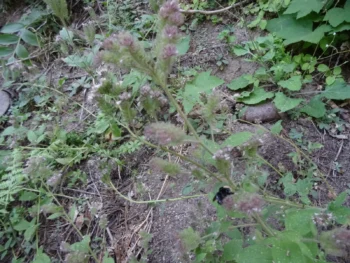
Changeable Phacelia: A Lesser-Known Native Wildflower for Western Gardens
If you’re exploring native plants for your western garden, you might come across changeable phacelia (Phacelia mutabilis), a biennial wildflower that’s part of the fascinating Phacelia genus. While this particular species doesn’t grab headlines like some of its showier cousins, it represents an interesting option for gardeners interested in supporting native plant diversity.
What is Changeable Phacelia?
Changeable phacelia is a native biennial forb, meaning it’s a non-woody flowering plant that typically completes its life cycle over two years. As a member of the borage family, it shares characteristics with other Phacelia species but maintains its own unique identity in the plant kingdom.
This native wildflower belongs to a genus known for producing excellent pollinator plants, though specific information about this particular species’ blooms and wildlife benefits is limited in current botanical literature.
Where Does It Grow Naturally?
Changeable phacelia is native to the western United States, naturally occurring across four states:
- California
- Nevada
- Oregon
- Washington
This distribution suggests it’s adapted to western growing conditions and climate patterns, making it potentially suitable for gardens within its native range.
- Species observed
- No observations
Should You Plant Changeable Phacelia?
Here’s where things get interesting (and a bit challenging). While changeable phacelia is undoubtedly a legitimate native species, detailed growing information and garden performance data for this specific plant is quite limited. This doesn’t necessarily make it a poor choice, but it does mean you’ll be somewhat pioneering if you decide to grow it.
The Case for Planting It
- Native status: As a true native, it supports local ecosystems
- Biennial nature: Offers garden interest across two growing seasons
- Family connections: Related to other excellent pollinator plants in the Phacelia genus
- Regional adaptation: Evolved to thrive in western conditions
The Challenges
- Limited availability: You might have trouble finding seeds or plants
- Unknown garden performance: Limited information about how it behaves in cultivation
- Growing guidance: Specific care requirements aren’t well documented
Alternative Native Phacelia Options
If you’re drawn to the idea of growing native Phacelia species but want something with more proven garden performance, consider these well-documented alternatives native to overlapping regions:
- Desert bluebells (Phacelia campanularia) – stunning blue flowers
- Lacy phacelia (Phacelia tanacetifolia) – excellent pollinator magnet
- Caterpillar phacelia (Phacelia cicutaria) – interesting foliage and form
If You Decide to Try Growing It
Should you manage to source seeds or plants of changeable phacelia, here are some general guidelines based on what we know about the genus and its native habitat:
- Timing: As a biennial, plant in fall for blooms the following year
- Location: Choose a spot that mimics natural western growing conditions
- Soil: Well-draining soil is likely preferred, as with most western natives
- Water: Probably drought-tolerant once established, following typical western native patterns
- Maintenance: Allow plants to complete their natural cycle and self-seed
The Bottom Line
Changeable phacelia represents an intriguing piece of western native plant diversity, but it’s not necessarily the best choice for most gardeners due to limited availability and growing information. If you’re a native plant enthusiast who enjoys experimenting with lesser-known species, it might be worth seeking out. However, if you’re looking for reliable native plants with proven garden performance, you’ll find better-documented options within the same genus and region.
Sometimes the most changeable thing about a plant is how much we know about growing it – and in this case, there’s room for more discovery!