Channel Island Scrub Oak: A Rare California Native Worth Growing Responsibly
Meet the Channel Island scrub oak (Quercus pacifica), a charming little evergreen that’s as unique as the islands it calls home. This compact oak might not tower over your garden like its mighty cousins, but what it lacks in stature, it more than makes up for in character and ecological value.
A Rare Island Treasure
Here’s something that makes this oak extra special: it’s actually quite rare. The Channel Island scrub oak has a Global Conservation Status of S3, meaning it’s considered vulnerable with only 21 to 100 occurrences worldwide and between 3,000 to 10,000 individual plants in existence. This rarity makes it a conservation priority, so if you’re thinking about adding one to your garden, make sure you source it responsibly from reputable native plant nurseries that propagate rather than wild-collect their plants.
Where It Comes From
This California native is endemic to just a handful of the Channel Islands – specifically Santa Cruz, Santa Rosa, and Santa Catalina Islands. It’s found nowhere else on Earth, making your garden a potential refuge for this special species.
- Species observed
- No observations
What It Looks Like
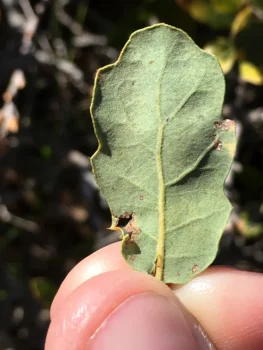
Don’t expect a towering giant – the Channel Island scrub oak is a multi-stemmed shrub that typically stays under 13-16 feet tall, making it perfect for smaller spaces. Its evergreen leaves are leathery, dark green, and about 1-3 inches long with distinctive spiny edges that give it real personality. Like other oaks, it produces small acorns that are beloved by wildlife.
Why Your Garden (and Wildlife) Will Love It
This tough little oak brings several benefits to your landscape:
- Extreme drought tolerance once established – perfect for water-wise gardens
- Salt tolerance makes it great for coastal locations
- Provides structure and habitat for beneficial insects
- Excellent for erosion control on slopes
- Low maintenance once established
- Supports conservation of a rare species
Perfect Garden Settings
The Channel Island scrub oak shines in:
- Xeriscapes and drought-tolerant landscapes
- Coastal gardens where salt spray is a concern
- Native plant gardens celebrating California flora
- Wildlife habitat gardens
- Mediterranean-style landscapes
Growing Conditions
This adaptable oak thrives in USDA hardiness zones 9-11, making it suitable for most of coastal and southern California. It prefers:
- Full sun to partial shade
- Well-draining soils (it hates wet feet)
- Minimal water once established
- Good air circulation
Planting and Care Tips
Getting your Channel Island scrub oak off to a good start is pretty straightforward:
Planting: Fall is the ideal time to plant, giving the roots time to establish before the dry summer months. Dig a hole twice as wide as the root ball but no deeper.
First Year Care: Water regularly during the first growing season to help establish a strong root system. After that, it’s quite drought tolerant.
Ongoing Maintenance: Very little needed! Minimal pruning required – just remove any dead or damaged branches. Avoid summer watering once established, as this can lead to root problems.
A Conservation Choice
By choosing to grow Channel Island scrub oak, you’re not just adding an attractive, low-maintenance plant to your garden – you’re also supporting the conservation of a rare California native. Just remember to source your plant responsibly from nurseries that propagate their own stock rather than collecting from wild populations.
This little oak proves that great things come in small packages, offering beauty, wildlife value, and a connection to California’s unique island ecosystems right in your own backyard.