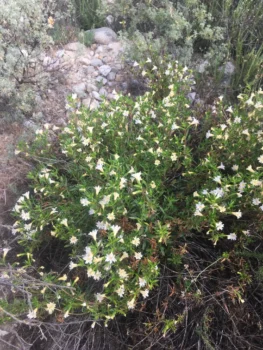
Chaparral Bush Monkeyflower: A Rare Gem for Water-Wise Gardens
If you’re looking to add a splash of vibrant color to your drought-tolerant garden while supporting local wildlife, the chaparral bush monkeyflower might just be your new best friend. This California native shrub brings both beauty and ecological value to water-wise landscapes, though its rarity makes it a special treasure worth seeking out responsibly.
What Makes Chaparral Bush Monkeyflower Special?
Scientifically known as Diplacus linearis, this perennial shrub is a true California native that has adapted beautifully to the state’s Mediterranean climate. As a multi-stemmed woody plant, it typically stays under 13-16 feet tall, making it perfect for residential landscapes where you want impact without overwhelming your space.
The plant produces stunning tubular flowers in shades of orange to red that practically glow against its sticky, aromatic foliage. These aren’t just pretty faces either – those trumpet-shaped blooms are perfectly designed to attract hummingbirds, making your garden a wildlife haven.
Where Does It Call Home?
This monkeyflower is exclusively native to California, where it thrives in chaparral and coastal sage scrub communities. You’ll find it naturally growing in the wild landscapes of Southern California, where it has evolved to handle the region’s unique climate challenges.
- Species observed
- No observations
A Word About Rarity
Here’s something important to know: chaparral bush monkeyflower has a Global Conservation Status of S2S3Q, indicating it’s considered rare in its native range. This means if you decide to add this beauty to your garden, please make sure you source it from reputable native plant nurseries that propagate their plants responsibly rather than collecting from wild populations.
Why Your Garden (and Local Wildlife) Will Love It
There are plenty of reasons to consider this native shrub for your landscape:
- Hummingbird magnet: Those tubular flowers are like nature’s hummingbird feeders
- Drought champion: Once established, it thrives with minimal supplemental watering
- Native bee friendly: Supports local pollinators that have co-evolved with this plant
- Low maintenance: Perfect for busy gardeners who want beauty without fuss
- Year-round interest: Attractive foliage provides structure even when not in bloom
Growing Your Chaparral Bush Monkeyflower
Climate Needs: This plant thrives in USDA hardiness zones 9-11, making it perfect for California’s mild winter regions and similar Mediterranean climates.
Sun and Soil: Give your monkeyflower full sun to partial shade and well-draining soil. Like many California natives, it absolutely cannot tolerate soggy roots, so good drainage is non-negotiable.
Watering Wisdom: Here’s where this plant really shines – once established (usually after the first year), it needs very little supplemental water. During its first season, provide regular water to help it get settled, then gradually reduce as it establishes its root system.
Planting and Care Tips
- Best planting time: Fall is ideal, giving the plant time to establish before the hot summer months
- Spacing: Allow plenty of room for mature size – these shrubs like their space
- Pruning: Light pruning after flowering can help maintain shape and encourage bushier growth
- Fertilizing: Skip the fertilizer – California natives prefer lean soil and can be damaged by too much nutrition
- Mulching: A light layer of gravel or decomposed granite works better than organic mulch
Perfect Garden Companions
Chaparral bush monkeyflower plays well with other California natives and Mediterranean plants. Consider pairing it with salvias, penstemons, or ceanothus for a stunning native plant garden that supports local ecosystems while conserving water.
Is This Plant Right for Your Garden?
This monkeyflower is perfect for gardeners who want to create sustainable, water-wise landscapes that support local wildlife. It’s ideal for Mediterranean-style gardens, xeriscapes, and anyone looking to reduce their water usage without sacrificing beauty.
However, remember its rarity status means you’ll need to source it responsibly. Contact local native plant societies or specialized native plant nurseries to find ethically propagated specimens. By choosing to grow this rare beauty, you’re not just adding to your garden – you’re helping preserve a piece of California’s natural heritage.