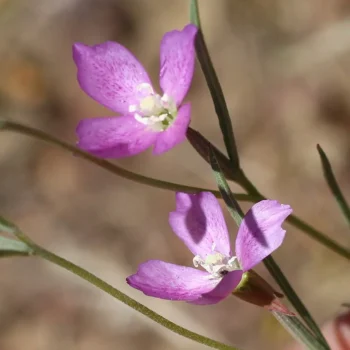
Chaparral Clarkia: A Delicate California Native for Your Wildflower Garden
If you’re looking to add a touch of California’s natural charm to your garden, chaparral clarkia (Clarkia affinis) might just be the perfect addition. This delicate annual wildflower brings a splash of soft color and native authenticity to any landscape, while supporting local pollinators and requiring minimal care once established.
What Makes Chaparral Clarkia Special?
Chaparral clarkia is a true California native, found exclusively in the Golden State’s chaparral and foothill regions. As an annual forb, this charming plant completes its entire life cycle in one growing season, producing delicate four-petaled flowers in lovely shades of pink to purple that dance gracefully in the spring and early summer breeze.
The plant grows naturally throughout California, from coastal ranges to inland foothills, making it well-adapted to the state’s Mediterranean climate.
- Species observed
- No observations
Garden Appeal and Design Role
Don’t let its delicate appearance fool you – chaparral clarkia packs a visual punch in the right setting. Its small but abundant flowers create a soft, naturalistic effect that works beautifully in:
- Native California wildflower gardens
- Drought-tolerant landscapes
- Naturalized meadow areas
- Pollinator gardens
- Rock gardens with good drainage
The plant’s modest size and gentle colors make it an excellent companion for other California natives, where it can fill in gaps and provide a soft backdrop for showier species.
Growing Conditions and Care
One of chaparral clarkia’s best qualities is its easy-going nature. This annual thrives in USDA hardiness zones 8-10, which perfectly matches California’s Mediterranean climate zones. Here’s what it needs to flourish:
- Sunlight: Full sun to partial shade
- Soil: Well-draining soil is essential – it won’t tolerate soggy conditions
- Water: Drought-tolerant once established, requiring minimal supplemental irrigation
- Maintenance: Virtually maintenance-free after germination
Planting and Propagation Tips
Getting chaparral clarkia established in your garden is refreshingly straightforward:
- Direct sow seeds in fall for spring germination – this mimics natural growing patterns
- Lightly rake seeds into prepared soil, but don’t bury them too deeply
- Water gently until germination occurs
- Once established, reduce watering significantly
- Allow plants to self-seed for naturalized colonies in future years
Benefits for Wildlife and Pollinators
Chaparral clarkia isn’t just pretty – it’s also incredibly beneficial for local wildlife. The flowers attract a variety of native pollinators, including:
- Native California bees
- Butterflies
- Beneficial insects
By planting chaparral clarkia, you’re supporting the local ecosystem and helping maintain important pollinator populations.
Important Conservation Note
Chaparral clarkia has a conservation status of S3S4, indicating it may face some population pressures in the wild. If you choose to grow this lovely native, please source seeds or plants from reputable native plant nurseries that practice responsible collection methods. This ensures you’re supporting conservation efforts rather than impacting wild populations.
Should You Plant Chaparral Clarkia?
If you’re gardening in California and want to create a beautiful, low-maintenance wildflower display that supports local wildlife, chaparral clarkia is an excellent choice. Its drought tolerance, easy care requirements, and authentic California heritage make it perfect for gardeners looking to embrace native plant gardening.
Just remember to source your seeds responsibly, and you’ll be rewarded with delicate spring blooms that capture the essence of California’s natural beauty right in your own backyard.