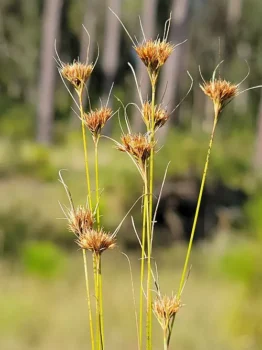
Chapman’s Beaksedge: A Specialized Native Sedge for Wetland Gardens
If you’re looking to create an authentic wetland garden or tackle a perpetually soggy spot in your yard, Chapman’s beaksedge (Rhynchospora chapmanii) might just be the unsung hero you need. This humble native sedge may not win any beauty contests, but it plays a crucial role in southeastern ecosystems and can be a valuable addition to the right garden setting.
What is Chapman’s Beaksedge?
Chapman’s beaksedge is a native sedge that belongs to the grass-like plant family. Don’t let its modest appearance fool you – this little plant is perfectly adapted to life in wet, challenging conditions where many other plants would struggle. As both an annual and perennial species, it has a flexible life strategy that helps it thrive in dynamic wetland environments.
Where Does It Grow Naturally?
This southeastern native calls the coastal plains home, naturally occurring across Alabama, Florida, Georgia, Louisiana, Mississippi, North Carolina, and South Carolina. It’s perfectly at home in the warm, humid conditions of the Southeast and has evolved specifically for this region’s unique climate and soil conditions.
- Species observed
- No observations
The Wetland Specialist
Here’s where Chapman’s beaksedge really shines – it’s classified as an Obligate Wetland plant in both the Atlantic and Gulf Coastal Plain and Eastern Mountains and Piedmont regions. This means it almost always occurs in wetlands and is perfectly adapted to constantly moist or wet conditions that would be problematic for most garden plants.
Should You Plant Chapman’s Beaksedge?
Chapman’s beaksedge isn’t for everyone, but it could be perfect for you if:
- You have a consistently wet or boggy area in your landscape
- You’re creating a rain garden or wetland restoration project
- You want to support native ecosystems with authentic local plants
- You’re working on a naturalized landscape in the Southeast
However, you might want to skip this one if you’re looking for:
- Showy flowers or dramatic foliage
- A plant for dry or well-drained areas
- Something for formal garden designs
- A plant that thrives outside USDA zones 8-10
Growing Chapman’s Beaksedge Successfully
The key to success with Chapman’s beaksedge is understanding its love affair with moisture. This plant thrives in full sun to partial shade but absolutely requires consistently moist to wet, acidic soils. Think bog conditions rather than typical garden soil.
Once established, this sedge is refreshingly low-maintenance. It’s adapted to handle the challenges of wetland life, including occasional flooding and nutrient-poor conditions. The most important thing you can provide is consistent moisture – let this area dry out, and your beaksedge won’t be happy.
The Bottom Line
Chapman’s beaksedge may not be the most glamorous plant in the native garden world, but it serves an important ecological purpose. If you have the right wet, acidic conditions in zones 8-10, this specialized native can help you create authentic wetland habitat while solving drainage challenges. Just remember – this is definitely a right plant, right place situation where matching the plant’s specific needs is crucial for success.