Charleston Peak Mousetail: A Rare Nevada Alpine Gem
Meet the Charleston Peak mousetail (Ivesia cryptocaulis), one of Nevada’s most elusive native wildflowers. This tiny alpine treasure calls just one place home: the high peaks of southern Nevada’s Spring Mountains. While you might be tempted to add this rare beauty to your garden, there’s much more to this story than meets the eye.
What Makes Charleston Peak Mousetail Special?
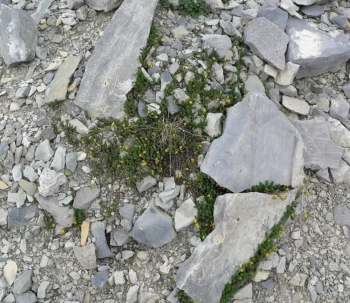
This delicate perennial forb is what botanists call an endemic species – meaning it exists nowhere else on Earth except in its small corner of Nevada. Charleston Peak mousetail forms low rosettes of finely divided, almost fern-like leaves that hug the rocky alpine terrain. Come summer, it sends up small clusters of tiny white to pale yellow flowers that seem to glow against the stark mountain landscape.
As a herbaceous perennial, this plant lacks woody stems and dies back each winter, returning from underground parts when conditions are right. It’s perfectly adapted to life above treeline, where fierce winds, intense UV radiation, and dramatic temperature swings would defeat most garden plants.
Where Does It Call Home?
Charleston Peak mousetail is found exclusively in Nevada, specifically in the alpine and subalpine zones of the Spring Mountains near Las Vegas. This tiny population clings to life in rocky crevices and gravelly slopes at elevations where most plants simply can’t survive.
- Species observed
- No observations
A Conservation Concern
Here’s where things get serious: Charleston Peak mousetail carries a Global Conservation Status of S2, meaning it’s imperiled. With only 6 to 20 known locations and an estimated 1,000 to 3,000 individual plants in existence, this species is extremely vulnerable to extinction. Climate change, recreational impacts, and habitat disturbance all pose threats to its survival.
Should You Grow Charleston Peak Mousetail?
The short answer is: probably not, but for important reasons. While this native plant deserves our admiration and protection, attempting to grow it comes with significant challenges and ethical considerations:
- Rarity concerns: Any plant material must come from responsibly sourced, legally obtained sources – never wild collection
- Extreme growing requirements: This plant needs very specific alpine conditions that are nearly impossible to replicate in most gardens
- Conservation priority: Efforts are better focused on protecting existing wild populations
Growing Conditions (For Specialists Only)
If you’re an experienced alpine plant specialist with proper permits and ethically sourced material, Charleston Peak mousetail requires:
- Excellent drainage: Think pure gravel with minimal organic matter
- Cool temperatures: USDA zones 4-7, with protection from hot summer conditions
- High light: Full sun but with cool air temperatures
- Minimal water: Drought conditions after spring snowmelt
- Winter protection: Consistent snow cover or cold frame protection
Supporting Pollinators and Wildlife
In its native habitat, Charleston Peak mousetail likely supports specialized alpine pollinators, including small native bees and flies adapted to high-elevation conditions. These relationships took thousands of years to develop and are part of what makes this ecosystem so unique and irreplaceable.
Better Alternatives for Your Garden
Instead of attempting to grow this rare species, consider these more accessible Nevada natives that offer similar delicate beauty:
- Desert marigold for sunny, dry spots
- Nevada lupine for colorful spikes
- Penstemon species for tubular flowers
- Native sedums for rock garden appeal
How You Can Help
The best way to support Charleston Peak mousetail is through conservation rather than cultivation. Consider supporting organizations working to protect Nevada’s Spring Mountains, practice Leave No Trace ethics when hiking in alpine areas, and choose common native plants for your garden instead.
Sometimes the most loving thing we can do for a rare plant is to admire it from afar and work to protect the wild places it calls home. Charleston Peak mousetail reminds us that not every beautiful native plant belongs in our gardens – some belong only to the mountains.