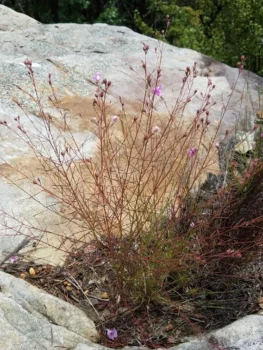
Chattahoochee False Foxglove: A Delicate Native Beauty for Southern Gardens
If you’re looking to add a touch of delicate charm to your native plant garden, meet the Chattahoochee false foxglove (Agalinis plukenetii). This petite annual wildflower might not be the showiest plant in your garden, but what it lacks in size, it more than makes up for in grace and ecological value.
What Makes This Plant Special
The Chattahoochee false foxglove is a true southeastern native, calling Alabama, Florida, Georgia, Louisiana, Mississippi, South Carolina, and Tennessee home. As an annual forb, this plant completes its entire life cycle in one growing season, producing charming pink to purple tubular flowers that seem to dance on delicate stems.
Don’t expect a towering giant – this little beauty stays relatively compact, making it perfect for adding fine texture and late-season color to your landscape without overwhelming other plants. Its linear, thread-like leaves create an airy appearance that pairs beautifully with bolder native companions.
- Species observed
- No observations
Why Your Garden (and Local Wildlife) Will Love It
Here’s where the Chattahoochee false foxglove really shines: it’s a pollinator magnet! Those small tubular flowers are perfectly designed for:
- Native bees seeking nectar
- Butterflies looking for a fuel stop
- Other beneficial insects that keep your garden ecosystem humming
As a native species, it’s already perfectly adapted to local conditions and won’t compete with or crowd out other native plants in your area.
Where to Plant It
This charming wildflower is ideal for:
- Native plant gardens
- Wildflower meadows
- Naturalistic landscapes
- Areas where you want to add delicate texture without bulk
It thrives in USDA hardiness zones 8-10, which perfectly matches its natural southeastern range.
Growing Chattahoochee False Foxglove
Here’s the best news: this native beauty is refreshingly low-maintenance! It prefers sandy, well-drained soils and can handle full sun to partial shade conditions. Once established, it’s quite drought tolerant – a real blessing for busy gardeners.
Planting and Care Tips
Getting started with Chattahoochee false foxglove is straightforward:
- Direct seed in fall or early spring for best results
- Choose a spot with good drainage – soggy soil is its main enemy
- Give it some sun, though it can tolerate a bit of shade
- Once planted, step back and let nature take its course
- Enjoy watching it self-seed for next year’s display
The minimal care required makes this plant perfect for gardeners who want maximum ecological impact with minimum fuss.
A Word About Sustainability
As with any native plant, sourcing matters. Make sure you’re getting your seeds or plants from reputable native plant nurseries or seed suppliers. This ensures you’re getting the true species and supporting responsible growing practices.
The Bottom Line
While the Chattahoochee false foxglove might not be the star of your garden show, it’s definitely a valuable supporting cast member. Its delicate beauty, pollinator appeal, and easy-going nature make it a wonderful addition to any southeastern native plant garden. Plus, knowing you’re supporting local wildlife and preserving a piece of regional botanical heritage? That’s the kind of gardening that feels really good.
So if you’re ready to embrace the subtle charm of native wildflowers, give this little southeastern gem a try. Your local pollinators will thank you!