Checkered Rattlesnake Plantain: A Rare Woodland Jewel for Shade Gardens
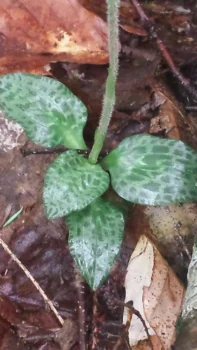
If you’ve ever stumbled upon a small plant with leaves that look like they’ve been decorated with intricate white lacework, you might have encountered one of North America’s most distinctive native orchids: the checkered rattlesnake plantain (Goodyera tesselata). This perennial forb is a true woodland treasure that brings unique beauty to shaded garden spaces.
What Makes Checkered Rattlesnake Plantain Special
Don’t let the name fool you – this charming plant has nothing to do with rattlesnakes! The rattlesnake moniker comes from the distinctive white veining pattern on its dark green leaves, which resembles the geometric patterns found on some snake skins. The scientific name Goodyera tesselata (also known by its synonym Peramium tesselatum) literally means checkered, referring to this eye-catching tessellated leaf pattern.
As a member of the orchid family, this herbaceous perennial produces small, delicate white flowers on upright spikes, though many gardeners grow it primarily for its stunning foliage display.
Where You’ll Find It Growing Wild
Checkered rattlesnake plantain is native to both Canada and the lower 48 United States, with a range that spans across the cooler regions of eastern North America. You can find it growing naturally in Manitoba, New Brunswick, Nova Scotia, Ontario, Prince Edward Island, Quebec, Newfoundland, and throughout many northeastern and Great Lakes states including Connecticut, Maine, Maryland, Massachusetts, Michigan, Minnesota, New Hampshire, New Jersey, New York, Ohio, Pennsylvania, Rhode Island, Vermont, and Wisconsin.
- Species observed
- No observations
A Rare Beauty That Needs Protection
Here’s something important to know: checkered rattlesnake plantain is considered rare in some areas. In New Jersey, it has a rarity status of SX.1, meaning it’s extremely rare or possibly extinct in the state. This rarity makes it even more precious for native plant enthusiasts, but it also means we need to be extra careful about how we source it.
If you’re interested in growing this plant, only purchase from reputable nurseries that propagate their own stock – never collect from the wild!
Growing Conditions: It’s All About the Shade
This woodland native thrives in the cool, shaded conditions of forest floors. Based on its wetland status as Facultative Upland across all regions, checkered rattlesnake plantain usually prefers non-wetland conditions but can tolerate some moisture. Here’s what it needs to flourish:
- Deep shade to partial shade (think forest understory conditions)
- Moist, well-draining, acidic soil rich in organic matter
- Cool temperatures and high humidity
- USDA hardiness zones 3-7
- Protection from hot afternoon sun
Perfect for Woodland Gardens
If you have a shaded area under mature trees or a woodland garden, checkered rattlesnake plantain can serve as an exquisite groundcover or accent plant. It works beautifully in:
- Native shade gardens
- Woodland wildflower gardens
- Rock gardens with dappled shade
- Conservation-focused landscapes
The plant’s low-growing habit and distinctive foliage make it an excellent choice for creating visual interest at ground level, especially when planted in small groups or drifts.
The Challenge: This Isn’t Your Average Garden Plant
Let’s be honest – checkered rattlesnake plantain isn’t the easiest plant to grow successfully. Like many native orchids, it depends on specific mycorrhizal fungi in the soil for nutrition. This symbiotic relationship makes it notoriously difficult to transplant and establish in garden settings.
Many gardeners find it challenging to maintain long-term, and it’s often best appreciated in its natural habitat or left to specialized native plant growers. If you do decide to try growing it, patience and the right conditions are absolutely essential.
Wildlife and Pollinator Benefits
While not a major pollinator magnet, the small white flowers do attract some native pollinators, particularly smaller insects. The plant also contributes to the overall biodiversity of woodland ecosystems and provides habitat for forest floor-dwelling creatures.
Should You Grow Checkered Rattlesnake Plantain?
This rare native beauty is best suited for:
- Experienced native plant gardeners
- Those with naturally shaded, woodland-like conditions
- Gardeners committed to conservation and using responsibly sourced plants
- Anyone looking to support rare native species in cultivation
If you’re new to native gardening or don’t have the right growing conditions, you might want to start with easier woodland natives before tackling this challenging beauty. However, if you have the right spot and can source it responsibly, checkered rattlesnake plantain can be a truly rewarding addition to a shade garden – just don’t expect instant gratification!
Remember, by growing rare native plants like checkered rattlesnake plantain, you’re not just creating a beautiful garden – you’re also participating in conservation efforts that help preserve our native botanical heritage for future generations.