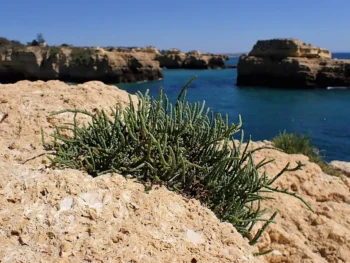
Chickenclaws: The Quirky Native Succulent That Thrives Where Others Fear to Grow
If you’ve ever wondered what plant could possibly thrive in the harsh, salty conditions of coastal marshes, meet chickenclaws (Sarcocornia perennis) – a fascinating native perennial that looks more like a tiny succulent than a wetland warrior. With its peculiar jointed stems and remarkable salt tolerance, this unique plant offers something truly special for the right gardening situation.
What Makes Chickenclaws Special?
Chickenclaws gets its amusing common name from its distinctive appearance – the small, fleshy, jointed segments of its stems do indeed resemble tiny chicken feet. This perennial forb herb creates an almost otherworldly landscape texture with its succulent-like stems that start green in spring and summer, then transform into beautiful reddish hues as autumn approaches.
Don’t expect showy flowers from this plant. Chickenclaws produces tiny, inconspicuous blooms that are perfectly adapted to attract the specialized pollinators found in salt marsh environments. The real show comes from the plant’s unique form and seasonal color changes.
Where Chickenclaws Calls Home
This remarkable native plant has quite an impressive range across North America. You’ll find chickenclaws naturally occurring from British Columbia and the northeastern United States all the way down to the Gulf Coast states, including Alabama, Connecticut, Florida, Georgia, Louisiana, Mississippi, New Hampshire, New Jersey, New York, North Carolina, South Carolina, Virginia, and Washington. It’s also been introduced to the Virgin Islands, where it has naturalized successfully.
- Species observed
- No observations
The Ultimate Wetland Specialist
Here’s where chickenclaws gets really interesting – it’s what botanists call an obligate wetland plant across every region where it grows. This means it almost always occurs in wetland conditions and has evolved specifically to thrive in environments that would kill most other plants. We’re talking about:
- Salt marshes and brackish wetlands
- Coastal areas with regular salt spray
- Saline soils that most plants can’t tolerate
- Areas with fluctuating water levels
Should You Grow Chickenclaws in Your Garden?
The honest answer? Probably not – unless you have very specific conditions and goals. Chickenclaws is incredibly specialized and requires conditions that most home gardeners simply don’t have. However, if you fall into one of these categories, it might be perfect for you:
- You’re working on coastal restoration projects
- You have naturally saline or brackish wetland areas on your property
- You’re creating a specialized salt marsh garden
- You live in a coastal area and want to support native ecosystems
- You’re fascinated by unusual, specialized plants
Growing Chickenclaws Successfully
If you’re determined to grow this unique native, here’s what you need to know:
USDA Hardiness Zones: 6-10, based on its natural distribution from Canada to the Gulf Coast
Light Requirements: Full sun – chickenclaws needs plenty of direct sunlight to thrive
Soil Needs: Here’s the challenging part – this plant requires saline or brackish soils that would be toxic to most garden plants. Regular garden soil won’t work.
Water Requirements: Consistent moisture to wet conditions. Remember, it’s an obligate wetland plant, so it needs to stay consistently moist to waterlogged.
Maintenance: Once established in the right conditions, chickenclaws is remarkably low-maintenance. It’s adapted to harsh coastal conditions, so it can handle salt spray, wind, and fluctuating water levels.
Benefits for Wildlife and Pollinators
While chickenclaws might not attract the typical garden butterflies and bees, it plays an important role in coastal ecosystems. Its small flowers provide nectar for specialized pollinators that have adapted to salt marsh environments, and the plant structure offers habitat for various coastal wildlife species.
The Bottom Line
Chickenclaws is undoubtedly one of the most specialized native plants you’ll encounter. While it’s not suitable for typical garden settings, it’s absolutely invaluable for coastal restoration projects and specialized wetland gardens. If you have the right conditions – think salt marsh rather than suburban backyard – this quirky native can add unique texture and support coastal ecosystems.
For most gardeners interested in supporting native plants, you’ll likely find better success with less specialized native wetland plants that can adapt to typical garden moisture conditions. But if you’re working in coastal environments or have access to saline wetland areas, chickenclaws offers a chance to work with one of nature’s most remarkably adapted native plants.