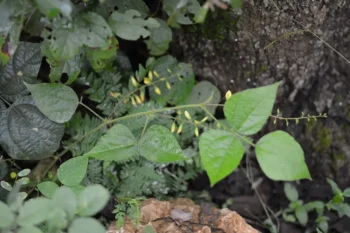
Chihuahuan Snoutbean: A Lesser-Known Native Gem for Desert Gardens
If you’re looking to add some authentic southwestern charm to your garden, you might want to get acquainted with the Chihuahuan snoutbean (Rhynchosia edulis). This unassuming native perennial herb might not be the flashiest plant on the block, but it has that special quality that only true natives possess – it absolutely belongs where it grows.
What Exactly Is Chihuahuan Snoutbean?
Chihuahuan snoutbean is a perennial forb that’s part of the legume family, which means it’s related to beans, peas, and other nitrogen-fixing plants. As a forb, it’s essentially an herbaceous plant without woody stems – think of it as the plant world’s version of a soft-spoken but steady friend who’s always there when you need them.
You might also see this plant listed under its former scientific names, including Rhynchosia pinetorum or Rhynchosia rariflora, but don’t let the name changes fool you – it’s the same dependable desert dweller.
Where Does It Call Home?
This native beauty is naturally found in Arizona, where it has adapted to the unique conditions of the Chihuahuan Desert region. Being a true native to the American Southwest, it’s perfectly adapted to the challenging conditions that would make many garden plants throw in the trowel.
- Species observed
- No observations
Should You Plant Chihuahuan Snoutbean?
Here’s where things get a bit tricky – and honestly refreshing in our age of information overload. Chihuahuan snoutbean is one of those wonderfully mysterious natives that hasn’t been extensively studied or widely cultivated. While this might seem like a drawback, it’s actually pretty exciting for adventurous native plant gardeners.
The Case For Planting It:
- It’s genuinely native to the Southwest, supporting local ecosystems
- As a legume, it likely helps improve soil by fixing nitrogen
- It’s adapted to challenging desert conditions
- You’ll be growing something truly unique and locally appropriate
The Honest Truth:
- Growing information is scarce, so you’ll be somewhat experimental
- It may be difficult to find in nurseries
- Specific care requirements aren’t well-documented
Growing Chihuahuan Snoutbean (What We Know)
While detailed cultivation guides for this species are about as rare as rain in the desert, we can make some educated guesses based on its native habitat and family characteristics.
Likely Growing Conditions:
- Full sun (it’s a desert native, after all)
- Well-draining soil – probably sandy or rocky
- Low water requirements once established
- Tolerant of poor soils
- Hardy in hot, dry conditions typical of Arizona
Garden Applications:
Given its native status and growth habit, Chihuahuan snoutbean would likely work well in:
- Xeriscapes and desert gardens
- Native plant collections
- Restoration projects
- Wildlife gardens (though specific benefits aren’t well-documented)
The Bottom Line
Chihuahuan snoutbean represents the kind of native plant that serious regional gardeners dream about – locally adapted, ecologically appropriate, and delightfully under-the-radar. While you won’t find detailed growing guides or glossy catalog photos, you’ll be participating in the important work of preserving and celebrating our native flora.
If you’re feeling adventurous and want to try growing this southwestern native, your best bet is to contact local native plant societies, desert botanical gardens, or specialized native plant nurseries in Arizona. They might have seeds or growing tips from fellow native plant enthusiasts who’ve had success with this intriguing species.
Sometimes the best garden adventures begin with the plants that don’t come with instruction manuals – they come with the satisfaction of growing something truly special and perfectly suited to your local landscape.