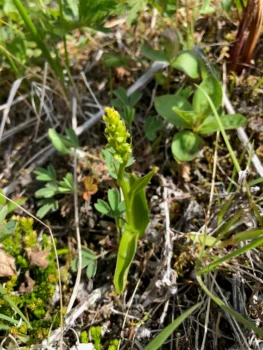
Chamisso’s Orchid: A Rare Pacific Northwest Wetland Gem
If you’ve ever wandered through the misty bogs and wetlands of the Pacific Northwest, you might have encountered one of nature’s most elusive treasures: Chamisso’s orchid (Platanthera chorisiana). This delicate native orchid is a true testament to the specialized beauty that thrives in our region’s unique wetland ecosystems.
What Makes Chamisso’s Orchid Special?
Chamisso’s orchid is a perennial forb that belongs to the fascinating world of native orchids. Unlike the showy tropical orchids you might see in flower shops, this modest beauty produces small, delicate white to greenish-white flowers arranged along a slender spike. The flowers feature the characteristic spur that gives the Platanthera genus its common name of bog orchids.
Growing typically 6 to 20 inches tall, this orchid may not command attention from across a meadow, but up close, its intricate floral structure reveals the remarkable complexity that makes orchids so captivating to botanists and nature lovers alike.
Where You’ll Find This Native Beauty
Chamisso’s orchid calls the cool, moist regions of the Pacific Northwest home. Its native range includes British Columbia, Alaska, and Washington, where it thrives in the region’s characteristic coastal wetlands and bogs.
- Species observed
- No observations
This orchid has earned the designation of Obligate Wetland species in both Alaska and the Western Mountains, Valleys, and Coast regions, meaning it almost always occurs in wetlands. You’ll typically find it in sphagnum bogs, wet meadows, and other consistently moist, acidic environments.
A Word of Caution: Rarity and Conservation
Before we dive into growing considerations, it’s important to note that Chamisso’s orchid has a Global Conservation Status of S3S4, which indicates some level of conservation concern. This rarity status means we should approach this species with respect and responsibility.
Should You Grow Chamisso’s Orchid?
Here’s where we need to have an honest conversation. While Chamisso’s orchid is undeniably beautiful and ecologically valuable, it’s not a plant for the typical home garden—or even for most experienced gardeners. Here’s why:
- Extreme specialization: This orchid requires very specific mycorrhizal relationships with soil fungi to survive
- Wetland dependency: It needs consistently wet, acidic conditions that are difficult to replicate
- Cool climate requirements: Adapted to the cool, humid conditions of coastal regions (USDA zones 3-7)
- Conservation concerns: Its rarity status suggests we should protect existing populations rather than attempt cultivation
Appreciating Rather Than Growing
Instead of trying to bring Chamisso’s orchid into your garden, consider these alternatives:
- Visit natural habitats: Seek out local bogs and wetlands where you might spot this orchid in its native environment
- Support wetland conservation: Contribute to organizations that protect the bog and wetland habitats this orchid depends on
- Choose garden-friendly natives: Plant other Pacific Northwest natives that are better suited to cultivation, such as wild ginger, inside-out flower, or native sedges for wet areas
Ecological Value and Wildlife Benefits
While you may not be growing Chamisso’s orchid in your backyard, it plays an important role in its native ecosystem. Like many orchids, it likely attracts specialized pollinators, particularly small moths and other nocturnal insects that are drawn to its subtle fragrance and pale flowers.
The plant’s presence in wetland ecosystems also indicates healthy bog conditions, making it something of an environmental indicator species.
Creating Orchid-Friendly Habitat
If you’re passionate about supporting native orchids, focus on creating and maintaining the broader wetland habitats they need:
- Preserve or restore wetland areas on your property
- Avoid using chemicals that might run off into nearby wetlands
- Plant native species that support the complex web of relationships wetland orchids depend on
- Participate in citizen science projects that monitor orchid populations
The Bottom Line
Chamisso’s orchid is a remarkable example of the specialized beauty found in Pacific Northwest wetlands. While it’s not suitable for home cultivation, understanding and appreciating this rare orchid can deepen our connection to the unique ecosystems of our region. Sometimes the best way to grow a plant is to ensure its wild habitat remains healthy and protected.
The next time you’re exploring a bog or wetland in the Pacific Northwest, keep your eyes peeled for the delicate spikes of Chamisso’s orchid. Spotting one in the wild is far more rewarding than any garden bloom—and you’ll be witnessing a true testament to the intricate beauty of our native plant communities.