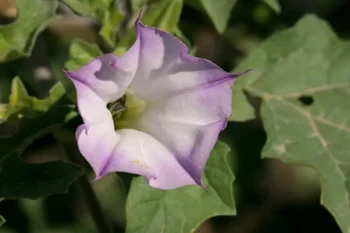
Chinese Thorn-Apple: A Mysterious Night-Blooming Beauty
Meet the Chinese thorn-apple (Datura quercifolia), an intriguing annual that brings a touch of nocturnal drama to the garden. With its trumpet-shaped white flowers that unfurl under moonlight and distinctive spiny seed pods, this plant is certainly a conversation starter. But before you rush to add it to your garden, let’s dive into what makes this plant special—and what you need to know before growing it.
What Exactly Is Chinese Thorn-Apple?
Chinese thorn-apple is an annual forb, which simply means it’s a non-woody herbaceous plant that completes its entire life cycle in one growing season. As a member of the Datura genus, it belongs to the nightshade family and shares some family traits that are both fascinating and worth respecting.
You might occasionally see this plant listed under the synonym Datura ferox, though botanically speaking, Datura quercifolia is the accepted name.
Where Does It Call Home?
According to available data, Chinese thorn-apple is considered native to the lower 48 United States, with populations documented across a surprisingly wide range of states including Arizona, Arkansas, California, Georgia, Kansas, Louisiana, Maryland, New Mexico, North Carolina, Oklahoma, Pennsylvania, South Carolina, and Texas.
- Species observed
- No observations
The Garden Appeal: Why You Might Want It
There’s something undeniably magical about a plant that saves its best show for evening hours. Chinese thorn-apple produces striking white, trumpet-shaped flowers that open at dusk, releasing a sweet fragrance that attracts night-flying moths and other evening pollinators. During the day, the flowers close up, but the plant continues to provide visual interest with its broad leaves and distinctive growth habit.
After flowering, the plant develops characteristic spiny seed pods that add architectural interest to the garden and can be quite striking in dried flower arrangements (with proper handling, of course).
Garden Role and Landscape Use
Chinese thorn-apple works beautifully as:
- A focal point in evening gardens designed for nighttime enjoyment
- An addition to cottage-style gardens where its informal growth habit fits right in
- Part of annual flower beds where its unique form adds textural contrast
- A conversation piece in specialized collections of unusual plants
Growing Conditions and Care
As an annual, Chinese thorn-apple is relatively straightforward to grow, though specific growing condition requirements for this species aren’t well-documented. However, most Datura species prefer:
- Full sun locations
- Well-draining soil
- Moderate water once established
- Protection from strong winds due to their somewhat brittle stems
Since it’s an annual, you can grow Chinese thorn-apple in USDA hardiness zones 3-11, starting fresh from seed each year.
Planting and Propagation
While specific propagation details for Datura quercifolia are limited, most annual Datura species are typically grown from seed. Direct sowing in spring after the last frost date usually works well, as these plants often prefer not to be transplanted.
Important Considerations
Before you get too excited about adding Chinese thorn-apple to your garden, there are some crucial safety considerations. All parts of Datura plants contain toxic alkaloids and should never be ingested. This makes them unsuitable for gardens where children or pets might be tempted to sample the plants.
Additionally, while the provided data suggests this plant is native to North America, there’s some botanical confusion around Datura quercifolia, as it’s more commonly recognized as a Chinese species in botanical literature. If you’re specifically seeking native plants for your region, you might want to consult local native plant societies or extension services to confirm the plant’s actual native status in your area.
The Bottom Line
Chinese thorn-apple can be a fascinating addition to the right garden—one where its evening-blooming habit can be appreciated and where safety considerations have been carefully addressed. Its unique flowers and architectural seed pods offer something different from typical annual flowers.
However, given the safety concerns and some uncertainty about its native status, many gardeners might prefer to explore other evening-blooming natives or well-behaved non-natives that offer similar nocturnal garden magic without the complications.
If you do decide to grow it, treat it with the respect it deserves, enjoy those moonlit flowers, and always prioritize garden safety above garden curiosity.