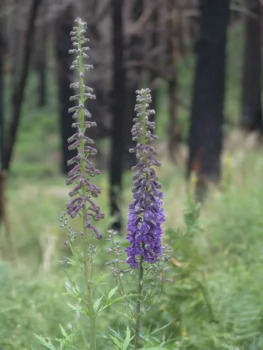
Chiricahua Mountain Larkspur: A Rare Southwestern Native Worth Knowing
If you’re looking for a truly unique addition to your native plant garden, let me introduce you to the Chiricahua Mountain larkspur (Delphinium andesicola). This perennial forb is about as specialized as native plants get, and while it might not be the easiest plant to find or grow, it represents the incredible diversity of our Southwestern flora.
What Makes This Larkspur Special?
The Chiricahua Mountain larkspur belongs to the beloved delphinium family, known for their distinctive spurred flowers and tall, elegant growth habits. As a native forb, this plant lacks woody stems but returns year after year from its perennial root system. It’s one of those plants that makes you appreciate the intricate beauty of our native ecosystems.
Where Does It Call Home?
This larkspur has a very limited native range, naturally occurring only in Arizona and New Mexico. As its common name suggests, it’s particularly associated with mountainous regions of the Southwest. This restricted distribution makes it a true regional treasure for gardeners in these areas.
- Species observed
- No observations
Understanding Its Growing Needs
Here’s where things get a bit tricky – and why this plant isn’t commonly found in garden centers. The Chiricahua Mountain larkspur has specific growing requirements that reflect its mountain origins:
- Wetland preference: It’s classified as Facultative Upland, meaning it typically grows in non-wetland areas but can tolerate some moisture
- Specialized habitat: Being adapted to specific mountain conditions, it likely prefers well-draining soils and particular elevation ranges
- Regional climate: Best suited for the climate conditions of its native Arizona and New Mexico range
Conservation Considerations
Here’s something important to know: this larkspur has a global conservation status of S3?, which means its conservation status is currently undefined or uncertain. This suggests that more research is needed to understand its population stability and distribution.
If you’re interested in growing this plant, it’s crucial to source it responsibly. Never collect plants from the wild, and only purchase from reputable native plant nurseries that can verify their plants are propagated, not wild-collected.
Is This Plant Right for Your Garden?
The Chiricahua Mountain larkspur is definitely not a beginner’s plant. Consider this species if you:
- Live within its native range in Arizona or New Mexico
- Are experienced with challenging native plants
- Want to support local biodiversity and conservation efforts
- Have garden conditions that mimic its natural mountain habitat
- Are patient with specialized plants that may take time to establish
Alternative Choices
If the Chiricahua Mountain larkspur proves too challenging to source or grow, consider other native delphiniums or larkspurs that might be more readily available in your region. Your local native plant society or extension office can recommend suitable alternatives that will provide similar aesthetic appeal with better availability.
The Bottom Line
While the Chiricahua Mountain larkspur may not be the easiest native plant to grow, it represents the incredible diversity of our Southwestern flora. For dedicated native plant enthusiasts in Arizona and New Mexico, it offers the opportunity to grow something truly special – just remember to source responsibly and be prepared for a gardening challenge that’s as rewarding as it is demanding.
Sometimes the most memorable plants in our gardens are the ones that teach us patience and respect for the intricate relationships between plants and their native habitats. The Chiricahua Mountain larkspur is definitely one of those teachers.