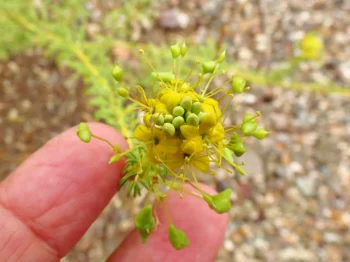
Chiricahua Mountain Stinkweed: A Hidden Gem of the Southwest Desert
If you’re looking to add some authentic southwestern character to your native garden, let me introduce you to a plant with perhaps the most unfortunate common name in the desert: Chiricahua Mountain stinkweed (Cleomella longipes). Don’t let the name fool you – this little annual deserves a spot in your native plant collection, especially if you’re passionate about supporting local biodiversity and growing truly regional species.
What is Chiricahua Mountain Stinkweed?
Chiricahua Mountain stinkweed is a native annual forb that belongs to the cleome family. As an herbaceous plant without woody tissue, it completes its entire life cycle in one growing season. This makes it a perfect choice for gardeners who enjoy the changing dynamics that annual plants bring to their landscapes.
This plant is truly a child of the American Southwest, native to the lower 48 states and naturally occurring across Arizona, New Mexico, and Texas. It’s adapted to the unique conditions of our desert regions, making it an authentic choice for native plant enthusiasts.
- Species observed
- No observations
Why Consider Growing This Native Annual?
Here’s where things get interesting – and important. Chiricahua Mountain stinkweed has a conservation status of S3S4, which suggests it may face some population pressures in the wild. By growing this species in our gardens, we can help preserve genetic diversity and provide habitat connectivity for the creatures that depend on it.
Garden Role and Landscape Design
This annual works beautifully in:
- Desert and xerophytic gardens
- Native plant collections
- Wildlife habitat gardens
- Low-water landscapes
- Naturalized wildflower areas
As a forb, it provides textural contrast to shrubby desert plants and can fill in gaps between perennials during its growing season.
Growing Conditions and Care
Based on its natural habitat across the arid Southwest, Chiricahua Mountain stinkweed likely thrives in:
- Full sun exposure
- Well-draining, sandy or rocky soils
- Minimal supplemental watering once established
- USDA hardiness zones 7-10
Wetland Tolerance
This adaptable annual shows different moisture preferences depending on the region. In the Arid West, it typically grows in upland (non-wetland) areas but can occasionally tolerate some moisture. In the Great Plains, it shows more flexibility with both wet and dry conditions, while in Western Mountains it again prefers drier upland sites.
Wildlife and Pollinator Benefits
While specific wildlife benefits aren’t well-documented for this species, members of the cleome family typically support small pollinators including native bees and beneficial insects. By growing native annuals like this one, you’re providing authentic food sources that local wildlife have evolved alongside.
A Word About Responsible Growing
Given its conservation status, it’s crucial to source Chiricahua Mountain stinkweed seeds or plants only from reputable native plant nurseries or seed companies that collect responsibly. Never collect from wild populations, as this could further stress already vulnerable communities.
The Bottom Line
Chiricahua Mountain stinkweed might not win any beauty contests based on its name alone, but it represents something much more valuable: a chance to grow a truly regional native that supports local ecosystems while adding authentic character to your desert garden. For gardeners passionate about biodiversity and native plant conservation, this little annual offers an opportunity to make a real difference, one garden at a time.
Sometimes the most rewarding plants to grow aren’t the showiest ones – they’re the ones that connect us most deeply to the unique character of our local landscapes.