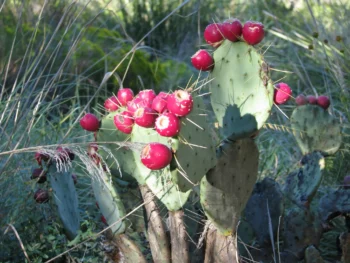
Chisos Mountain Pricklypear: A Rare Desert Gem for Your Garden
Looking for a unique, low-maintenance addition to your desert garden? Meet the Chisos Mountain pricklypear (Opuntia chisosensis), a rare and beautiful cactus that brings authentic southwestern charm to any landscape. This distinctive native plant offers gardeners a chance to grow something truly special – but with great beauty comes great responsibility.
What Makes This Pricklypear Special
The Chisos Mountain pricklypear is a perennial shrub that typically grows as a multi-stemmed woody plant, usually staying under 13-16 feet in height. Like other pricklypears, it features the classic flat, paddle-shaped segments (called pads) that give these cacti their distinctive appearance. In spring and summer, it produces cheerful yellow flowers that eventually give way to colorful red-purple fruits.
This isn’t just any ordinary pricklypear – it’s a plant with a fascinating story and a very specific home.
Where Does It Come From?
This remarkable cactus is native to Texas, specifically endemic to the Chisos Mountains in Big Bend National Park. Talk about an exclusive address! This limited native range makes it a true Texas treasure and explains why it’s not commonly found in garden centers.
- Species observed
- No observations
A Word About Rarity
Here’s something important every gardener should know: the Chisos Mountain pricklypear has a Global Conservation Status of S2S4, indicating it faces some conservation concerns in the wild. This means if you’re considering adding this beauty to your garden, you’ll want to source it responsibly from reputable nurseries that propagate their plants rather than wild-collect them. Never take plants from their natural habitat!
Why Grow Chisos Mountain Pricklypear?
There are several compelling reasons to consider this unique cactus:
- Authentic southwestern style: Perfect for xeriscaping and desert-themed gardens
- Low maintenance: Once established, it thrives with minimal care
- Drought tolerant: Excellent choice for water-wise landscaping
- Pollinator friendly: The bright yellow flowers attract bees and other beneficial insects
- Conversation starter: Its rarity and specific origin make it a unique focal point
Growing Conditions and Care
Like most cacti, the Chisos Mountain pricklypear is refreshingly low-maintenance once you get the basics right:
Sunlight: Full sun is essential – this desert dweller needs at least 6-8 hours of direct sunlight daily.
Soil: Well-draining soil is absolutely critical. Clay soils or areas where water pools will quickly kill this plant. Consider raised beds or adding sand and gravel to improve drainage.
Water: Less is definitely more. Water deeply but infrequently during the growing season, and reduce watering significantly in winter.
Climate: Hardy in USDA zones 8-10, this cactus can handle some cold but may need protection during extreme freezes.
Design Ideas for Your Landscape
The Chisos Mountain pricklypear works beautifully in several garden settings:
- Desert gardens: Combine with other native cacti and succulents
- Rock gardens: Plant among boulders and gravel for a natural look
- Xeriscapes: Perfect for water-wise landscape designs
- Specimen planting: Let it stand alone as a unique focal point
- Southwestern-style landscapes: Pair with agaves, yuccas, and native grasses
Planting and Establishment Tips
Spring is the ideal time to plant your Chisos Mountain pricklypear. Here’s how to set it up for success:
- Choose a location with excellent drainage and full sun exposure
- Dig a hole only as deep as the root ball but twice as wide
- Backfill with native soil mixed with coarse sand or gravel if drainage is poor
- Water thoroughly after planting, then wait for the soil to dry before watering again
- Mulch lightly with gravel or decomposed granite rather than organic mulch
Is This Plant Right for You?
The Chisos Mountain pricklypear is perfect for gardeners who:
- Live in warm, dry climates (zones 8-10)
- Want low-maintenance, drought-tolerant plants
- Appreciate unique, conversation-worthy specimens
- Are committed to responsible gardening with rare species
- Enjoy southwestern or desert-style landscaping
However, it might not be the best choice if you have heavy clay soil, live in a very humid climate, or prefer plants that need regular watering and attention.
The Bottom Line
The Chisos Mountain pricklypear offers gardeners something truly special – a rare, beautiful, and authentically southwestern plant that’s surprisingly easy to grow in the right conditions. Just remember to source it responsibly and give it the well-draining, sunny conditions it craves. With proper care, this Texas treasure can be a stunning addition to your landscape for years to come.
Ready to add some Big Bend beauty to your garden? Your desert landscape (and the pollinators) will thank you!