Christmas Cactus: A Spiny Southwestern Native Perfect for Desert Gardens
Don’t let the name fool you – this isn’t the houseplant that blooms during the holidays! The Christmas cactus we’re talking about today is Cylindropuntia leptocaulis, a spindly, fascinating native cactus that earns its festive moniker from the bright red fruits that decorate its branches throughout winter. Also known by its former scientific name Opuntia leptocaulis, this desert dweller is a fantastic choice for gardeners looking to embrace water-wise landscaping with a truly authentic southwestern flair.
Where This Desert Native Calls Home
This perennial shrub is native to the American Southwest, naturally thriving across Arizona, New Mexico, Oklahoma, and Texas. In the wild, you’ll find it dotting desert landscapes and grasslands, where it has adapted beautifully to harsh, arid conditions. Its native status makes it an excellent choice for gardeners wanting to support local ecosystems while creating stunning, low-maintenance landscapes.
- Species observed
- No observations
What Makes This Cactus Special
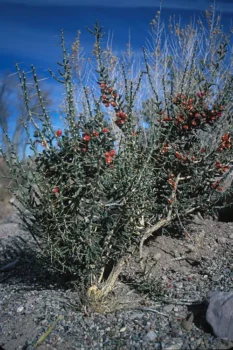
Christmas cactus stands out with its distinctive pencil-thin stems that branch out in an open, almost skeletal pattern. This multi-stemmed woody shrub typically grows 3-6 feet tall and equally wide, creating an architectural presence in the landscape. The stems are covered with small, needle-like spines that glisten in the sunlight.
The real show starts in late spring when small yellow flowers appear along the stems. These blooms attract bees and other pollinators, making this cactus a valuable addition to wildlife-friendly gardens. But the star of the show comes later – those bright red, berry-like fruits that persist well into winter, providing both visual interest during the dormant season and food for desert birds.
Perfect for Desert and Xeriscape Gardens
This native beauty shines in several landscape roles:
- Accent planting: Its unique form creates striking focal points
- Desert gardens: Pairs beautifully with other native cacti and succulents
- Xeriscape landscaping: Requires minimal water once established
- Natural barriers: The spines make it useful for security plantings
- Rock gardens: Thrives among rocks and gravel
Growing Conditions and Care
One of the best things about Christmas cactus is how easy it is to grow – if you give it what it wants! This desert native is happiest in:
- Full sun: At least 6-8 hours of direct sunlight daily
- Well-draining soil: Sandy, rocky, or gravelly soils work best
- Low water: Extremely drought tolerant once established
- USDA Zones 8-11: Can handle some cold but not prolonged freezes
Planting and Care Tips
Getting your Christmas cactus established is straightforward with these tips:
- Plant in spring: This gives the roots time to establish before winter
- Improve drainage: If your soil holds water, amend with sand and gravel or plant on a slope
- Water sparingly: Water deeply but infrequently during the first year, then rely on natural rainfall
- Handle with care: Wear thick gloves when planting – those spines are sharp!
- Skip the fertilizer: These plants prefer poor soils and don’t need feeding
Wildlife Benefits
Your Christmas cactus will become a wildlife magnet! The spring flowers provide nectar for native bees and other small pollinators, while the colorful winter fruits are a favorite food source for quail, doves, and other desert birds. The dense, spiny branches also offer nesting sites and protection for small wildlife.
Is This Cactus Right for Your Garden?
Christmas cactus is perfect for you if you’re looking for a low-maintenance, drought-tolerant native plant that offers year-round interest and supports local wildlife. It’s ideal for southwestern gardens, xeriscape designs, and anywhere you want to add authentic desert character.
However, consider carefully if you have small children or pets, as the spines can cause injury. Also, if you live in areas with heavy clay soil or frequent rainfall, this desert native might struggle without significant soil amendments.
For desert gardeners seeking a truly native, water-wise plant that brings both beauty and ecological benefits to the landscape, Christmas cactus is a wonderful choice that will reward you with years of minimal-maintenance enjoyment!