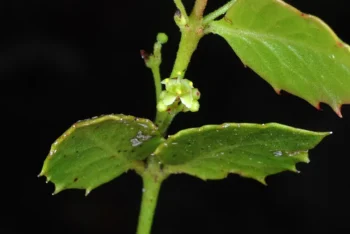
Christmasberry: A Rare Native Gem for Southeastern Gardens
If you’re looking for a unique native shrub that brings year-round interest to your garden, let me introduce you to Christmasberry (Crossopetalum ilicifolium). This lesser-known native treasure might just be the perfect addition to your landscape—with a few important considerations to keep in mind.
What is Christmasberry?
Christmasberry is a charming evergreen shrub native to the southeastern United States. This perennial woody plant typically grows as a multi-stemmed shrub, usually staying under 13-16 feet tall, making it perfect for residential landscapes. Its holly-like leaves and distinctive red berries give it both its common name and its year-round appeal.
Where Does Christmasberry Grow Naturally?
This native beauty calls the coastal regions of Florida and North Carolina home. You’ll find it thriving in the Atlantic and Gulf Coastal Plain regions, where it has adapted to sandy soils and coastal conditions over thousands of years.
- Species observed
- No observations
A Plant That Needs Our Protection
Here’s something important every gardener should know: Christmasberry has a Global Conservation Status of S3, meaning it’s considered vulnerable. With only 21-100 known occurrences and between 3,000-10,000 individuals in the wild, this species needs our help. If you’re considering adding it to your garden, please make sure you source it from reputable native plant nurseries that propagate their own stock rather than wild-collecting.
Why Choose Christmasberry for Your Garden?
There are several compelling reasons to consider this native shrub:
- Year-round interest: Evergreen foliage provides structure in winter, while red berries add seasonal color
- Low maintenance: Once established, it’s quite drought tolerant and requires minimal care
- Wildlife friendly: The small flowers attract pollinators, and the berries provide food for birds
- Coastal tough: Excellent salt tolerance makes it perfect for seaside gardens
- Native heritage: Supporting local ecosystems by choosing indigenous plants
Perfect Garden Settings
Christmasberry shines in several landscape scenarios:
- Coastal gardens where salt spray is a concern
- Native plant gardens focused on regional flora
- Naturalistic landscapes with an understory layer
- Wildlife gardens designed to support local fauna
- Low-maintenance landscapes in appropriate climate zones
Growing Conditions and Care
Christmasberry is surprisingly adaptable once you understand its preferences:
Climate: Hardy in USDA zones 8-10, perfect for the southeastern coastal regions
Light: Thrives in partial shade to full sun conditions
Soil: Prefers well-draining, sandy soils but can adapt to various soil types. Its wetland status as Facultative Wetland means it usually grows in wetlands but can handle drier conditions too
Water: Drought tolerant once established, though it appreciates consistent moisture during its first growing season
Planting and Care Tips
Getting your Christmasberry off to a good start is straightforward:
- Plant in spring or fall when temperatures are moderate
- Dig a hole twice as wide as the root ball but no deeper
- Backfill with native soil—no need for amendments in most cases
- Water regularly the first year while roots establish
- Apply a thin layer of organic mulch to retain moisture and suppress weeds
- Minimal pruning needed—just remove dead or damaged branches
A Word of Caution and Responsibility
While Christmasberry makes an excellent garden plant, its vulnerable status means we need to be responsible gardeners. Always purchase from nurseries that grow their own plants from seed or cuttings rather than collecting from wild populations. By choosing responsibly sourced plants, you’re helping protect wild populations while still enjoying this beautiful native species in your own garden.
The Bottom Line
Christmasberry offers southeastern gardeners a unique opportunity to grow something truly special—a beautiful, low-maintenance native shrub that supports local wildlife while adding year-round interest to the landscape. Just remember to source it responsibly, and you’ll have a living piece of your region’s natural heritage thriving in your own backyard.