Christ’s Indian Paintbrush: A Rare Gem You Probably Shouldn’t Grow
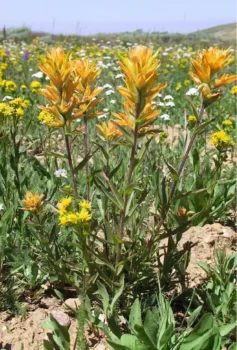
Meet Christ’s Indian paintbrush (Castilleja christii), one of nature’s most exclusive flowering plants. If you’re thinking this sounds like a plant you absolutely must have in your garden, well… you might want to sit down for this one. This stunning wildflower is so rare that it’s considered critically imperiled, making it more of a conservation treasure than a typical garden addition.
What Makes This Plant So Special?
Christ’s Indian paintbrush is a perennial forb—basically a non-woody flowering plant that comes back year after year. Like other members of the Indian paintbrush family, it produces those iconic fiery red-orange bracts (modified leaves) that surround small tubular flowers, creating a display that looks like nature’s own paintbrush dipped in sunset colors.
This isn’t your garden-variety wildflower, though. Castilleja christii holds the distinction of being native only to Idaho, and with a Global Conservation Status of S1, it’s considered critically imperiled. That means there are typically only five or fewer known populations, with fewer than 1,000 individual plants remaining in the wild.
Where Does It Call Home?
If you’re hoping to spot this botanical rarity in the wild, you’ll need to head to Idaho—and even then, you’ll need a lot of luck. Christ’s Indian paintbrush is endemic to the state, meaning it grows naturally nowhere else on Earth.
- Species observed
- No observations
Should You Grow It? (Spoiler Alert: Probably Not)
Here’s where we need to have an honest conversation. While Christ’s Indian paintbrush would certainly be a conversation starter in any garden, there are several compelling reasons why most gardeners should admire it from afar:
- Rarity concerns: With so few plants left in the wild, any gardening should only be done with responsibly sourced material—which is extremely difficult to obtain
- Parasitic nature: Like many Indian paintbrush species, this plant is partially parasitic, meaning it needs to attach to the roots of other plants to survive
- Specialized growing conditions: It requires very specific soil and climate conditions that are hard to replicate outside its native habitat
- Limited availability: You won’t find this at your local nursery—or probably any nursery
Growing Conditions (For the Truly Determined)
If you’re part of a legitimate conservation effort or botanical institution, here’s what Christ’s Indian paintbrush typically needs:
- USDA Hardiness Zones: Likely zones 4-7, based on Idaho’s climate
- Soil: Well-draining soils; specific requirements unknown but likely similar to other high-elevation Idaho natives
- Host plants: Requires other plants nearby for its parasitic lifestyle
- Sunlight: Specific light requirements are not well documented
Wildlife and Pollinator Benefits
When Christ’s Indian paintbrush does bloom, it likely provides nectar for hummingbirds and native bees, similar to other Castilleja species. Those tubular flowers and bright colors are classic hummingbird magnets, making this plant an important part of its ecosystem’s food web—another reason why conservation is so critical.
Better Alternatives for Your Garden
Instead of trying to grow this rare beauty, consider these more available Indian paintbrush relatives and other native Idaho plants:
- Prairie Indian paintbrush (Castilleja sessiliflora)
- Wyoming Indian paintbrush (Castilleja linariaefolia)
- Other colorful Idaho natives like penstemon, lupine, or Indian blanket
The Bottom Line
Christ’s Indian paintbrush is undoubtedly gorgeous and fascinating, but it’s best appreciated as a wild treasure rather than a garden plant. With so few individuals remaining, every plant in the wild is precious. If you’re passionate about rare plants, consider supporting conservation efforts or visiting botanical gardens that specialize in rare native species.
Sometimes the most beautiful gesture we can make as gardeners is to leave certain plants exactly where they belong—thriving in their natural habitat, however limited that may be.