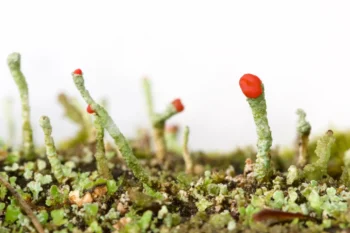
Understanding Cladonia macilenta var. bacillaris: A Fascinating North American Lichen
If you’ve ever noticed tiny, branching structures that look like miniature coral reefs growing on soil or rocks in your garden, you might have encountered a fascinating organism that’s neither plant nor animal – a lichen! Today, we’re diving into the world of Cladonia macilenta var. bacillaris, a native North American lichen that’s more common than you might think.
What Exactly Is This Mysterious Organism?
Cladonia macilenta var. bacillaris (also known by its synonym Cladonia bacillaris) is a type of lichen – a remarkable partnership between fungi and algae working together as one organism. Think of it as nature’s ultimate roommate situation, where both partners benefit from living together!
This particular lichen is native to North America, making it a true local resident that has been quietly doing its job in our ecosystems for countless years.
Where You’ll Find This North American Native
As a North American native species, Cladonia macilenta var. bacillaris has made itself at home across various regions of the continent. You’re most likely to spot it growing naturally on soil, decaying wood, or rock surfaces in areas with good air quality.
Is It Beneficial to Your Garden?
While you can’t exactly plant this lichen like you would a flower or shrub, its presence in your garden is actually a wonderful sign! Here’s why having Cladonia macilenta var. bacillaris around is a good thing:
- Air Quality Indicator: Lichens are like natural air quality monitors – they’re sensitive to pollution, so their presence suggests you have clean, healthy air
- Ecosystem Support: They contribute to soil formation and provide habitat for tiny creatures
- Natural Beauty: These small, branching structures add an interesting texture and natural appeal to garden spaces
- Low Maintenance: They require absolutely no care from you – they’re the ultimate low-maintenance garden residents!
How to Identify Cladonia macilenta var. bacillaris
Spotting this lichen is like going on a mini treasure hunt in your own backyard. Here’s what to look for:
- Small, branching structures that resemble tiny coral or miniature antlers
- Grayish-green coloration, though this can vary depending on moisture and light conditions
- Grows directly on soil, rocks, or decaying organic matter
- Typically forms small colonies or patches rather than growing as individual specimens
- Most noticeable when moist, as they become more vibrant and easier to spot
Should You Encourage Its Growth?
The beauty of lichens like Cladonia macilenta var. bacillaris is that they don’t need your help – they’ll show up naturally if conditions are right. You can’t really plant or cultivate them like traditional garden plants, but you can create conditions that make them more likely to appear:
- Maintain good air quality in your area
- Avoid using harsh chemicals or pesticides that might harm these sensitive organisms
- Leave some natural, undisturbed areas in your garden where they can establish
- Ensure adequate moisture without overwatering (they prefer natural rainfall patterns)
A Garden Guest Worth Appreciating
While Cladonia macilenta var. bacillaris might not provide the showy blooms or dramatic foliage of traditional garden plants, it offers something equally valuable – a sign that your garden ecosystem is healthy and balanced. These quiet little organisms are working behind the scenes to support the overall health of your outdoor space.
Next time you’re walking through your garden, take a moment to look down at the ground and appreciate these fascinating partnerships between fungi and algae. They’re a reminder that some of the most important garden residents are also the most humble ones!