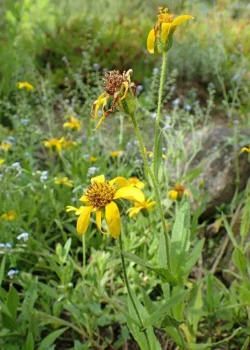
Clasping Arnica: A Charming Native Wildflower for Moist Garden Spots
If you’re looking to add a splash of cheerful yellow to your native plant garden, clasping arnica (Arnica amplexicaulis) might just be the perfect candidate. This delightful perennial wildflower brings both beauty and ecological value to the right garden setting, though it does have some specific preferences that make it a bit particular about where it calls home.
Meet the Clasping Arnica
Clasping arnica is a true North American native that belongs to the sunflower family. As a herbaceous perennial, it comes back year after year, slowly spreading through underground rhizomes to form gentle colonies. The plant gets its clasping common name from the way its leaves wrap around the stem, creating an attractive architectural feature even when it’s not in bloom.
This charming wildflower typically reaches about 2.5 feet in height with an upright, erect growth habit. During its active growing season in spring and summer, it produces eye-catching yellow flowers that are definitely hard to miss in the garden. The medium-textured green foliage provides a lovely backdrop for the bright blooms.
Where Clasping Arnica Calls Home
Clasping arnica has an impressive native range across western North America. You’ll find it growing naturally from Alaska down through western Canada (Alberta, British Columbia, Yukon, and Northwest Territories) and throughout much of the western United States, including California, Idaho, Montana, Nevada, Oregon, Utah, Washington, and Wyoming.
- Species observed
- No observations
It’s worth noting that this species has a somewhat unclear conservation status, so if you’re interested in growing it, make sure to source your plants or seeds from reputable native plant nurseries that practice responsible collection methods.
Garden Appeal and Design Role
What makes clasping arnica special in the garden? Those bright yellow summer flowers are definitely the star of the show, creating lovely splashes of color that pollinators seem to appreciate. The plant’s moderate growth rate means it won’t overwhelm neighboring plants, while its rhizomatous spreading habit allows it to naturally fill in areas over time.
This native beauty works wonderfully in:
- Native plant gardens and naturalized areas
- Woodland gardens with dappled shade
- Mountain or alpine-inspired landscapes
- Pollinator gardens focused on native species
- Areas where you want low-maintenance, long-lived perennials
Growing Conditions: The Key to Success
Here’s where clasping arnica gets a bit demanding – it really, really likes moisture. This isn’t a plant for dry, drought-prone spots or xeriscaped areas. Instead, it thrives in consistently moist conditions and actually has high moisture requirements throughout the growing season.
For best results, provide:
- Soil: Well-draining but consistently moist soils with medium texture (it adapts to coarse soils too but struggles in heavy clay)
- pH: Slightly acidic to neutral conditions (6.0-7.3)
- Light: Shade tolerant, making it perfect for woodland settings
- Climate: Cold hardy (tolerates temperatures down to -23°F) and needs at least 100 frost-free days
- Precipitation: Prefers areas receiving 20-40 inches of annual precipitation
Planting and Care Tips
Starting clasping arnica in your garden requires a bit of patience, as this species has a relatively short lifespan for a perennial and moderate establishment vigor. You can propagate it from seed (about 350,000 seeds per pound!) or from sprigs if you can source them responsibly.
Here are some helpful growing tips:
- Plant in spring after the last frost when soil can be kept consistently moist
- Space plants about 7,000-11,000 per acre if you’re doing a large naturalized planting
- Ensure consistent watering, especially during establishment
- Don’t expect rapid growth – this plant takes its time but is worth the wait
- Allow the plant to spread naturally through its rhizomes rather than trying to divide it frequently
- Minimal fertilization needed – medium fertility soils are perfect
The Bottom Line: Should You Grow Clasping Arnica?
Clasping arnica is definitely worth considering if you have the right conditions – particularly if you’re gardening in its native range and can provide consistent moisture. It’s a wonderful choice for gardeners who want to support local ecosystems with truly native plants, and those cheerful yellow flowers are sure to brighten up shady, moist spots where many other flowering plants might struggle.
However, if you’re dealing with dry conditions, heavy clay soils, or are looking for a low-maintenance plant that can handle neglect, this might not be your best bet. The high moisture requirements and specific soil preferences make it somewhat particular about its growing conditions.
For gardeners in the Pacific Northwest, northern California, and mountain regions where natural precipitation and cool, moist conditions prevail, clasping arnica can be a delightful addition to a native plant palette. Just remember to source your plants responsibly and be prepared to give this charming wildflower the consistent moisture it craves.