Clasping Venus’ Looking-Glass: A Charming Native Wildflower for Easy Gardens
If you’re looking for a native wildflower that practically grows itself while adding unique charm to your garden, meet clasping Venus’ looking-glass (Triodanis perfoliata). This delightful annual might have an unusual name, but it’s actually one of North America’s most adaptable and undemanding native plants.
What Makes This Plant Special?
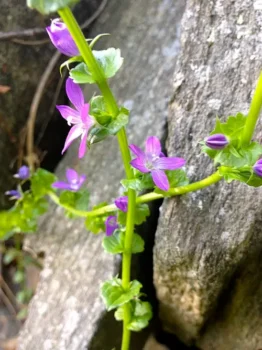
Clasping Venus’ looking-glass gets its memorable name from its distinctive leaves that appear to be skewered right through the middle by the stem – as if someone threaded the plant like beads on a string. These heart-shaped, clasping leaves create an eye-catching architectural effect that’s unlike anything else in the garden.
The small purple to violet bell-shaped flowers bloom along the stem from late spring through summer, creating a subtle but lovely display. While individual flowers are modest, they appear in clusters and have an understated elegance that works beautifully in naturalized settings.
Native Status and Where It Grows
This plant is a true North American native, naturally occurring across an impressive range that includes most of the United States and parts of Canada. You’ll find it growing wild from British Columbia to New Brunswick and south through nearly every U.S. state, making it one of our continent’s most widespread native wildflowers.
- Species observed
- No observations
Why Grow Clasping Venus’ Looking-Glass?
Here are several compelling reasons to consider this native gem:
- Incredibly easy to grow: As an annual forb, it establishes quickly and requires virtually no maintenance
- Supports wildlife: Provides nectar for small bees, flies, and butterflies, and serves as a food source for various animals
- Adaptable: Thrives in poor soils where other plants struggle
- Self-sustaining: Seeds itself readily, ensuring future generations
- Unique appearance: Those distinctive pierced leaves add textural interest
Perfect Garden Settings
Clasping Venus’ looking-glass works wonderfully in:
- Wildflower meadows and prairie restorations
- Cottage gardens with a naturalized feel
- Low-maintenance native plant gardens
- Areas with poor or disturbed soil
- Children’s gardens (the unusual leaves are fascinating to young gardeners)
Growing Conditions and Care
One of the best things about this plant is how undemanding it is. Clasping Venus’ looking-glass grows happily in USDA hardiness zones 3-9, though as an annual, it completes its entire life cycle in one growing season regardless of zone.
Soil requirements: Extremely adaptable to various soil types, including clay, sandy, and rocky soils. Actually prefers well-drained conditions and can handle poor, nutrient-deficient soils better than rich garden soil.
Light needs: Performs best in full sun but tolerates partial shade reasonably well.
Water requirements: Drought-tolerant once established. The plant’s facultative upland status means it typically grows in non-wetland areas but can occasionally handle somewhat moist conditions.
Planting and Establishment Tips
Getting started with clasping Venus’ looking-glass is refreshingly simple:
- When to plant: Direct seed in fall for spring germination, or sow in early spring
- Seeding depth: Barely cover seeds with soil – they need light to germinate
- Spacing: Seeds will naturally space themselves, but you can thin to 6-12 inches apart if desired
- Maintenance: Virtually none required once established
Wildlife and Pollinator Benefits
Don’t let the small flowers fool you – this plant is a valuable resource for wildlife. Small native bees, flies, and various butterfly species visit the blooms for nectar and pollen. Research indicates that larger animals also browse on the foliage, with some using it for 5-10% of their diet.
Potential Drawbacks to Consider
While clasping Venus’ looking-glass is generally wonderful, there are a few things to keep in mind:
- It can self-seed aggressively in ideal conditions – some gardeners love this, others find it weedy
- The flowers are small and may not provide the bold color impact some gardeners want
- As an annual, you’ll need to allow it to set seed or replant each year
- It may not compete well in heavily fertilized garden beds
The Bottom Line
Clasping Venus’ looking-glass is an excellent choice for gardeners who want to support native ecosystems while enjoying a truly low-maintenance plant. Its unique appearance, wildlife benefits, and incredible adaptability make it particularly valuable for naturalized gardens, prairie restorations, and areas where you want something beautiful but don’t want to fuss.
If you’re building a native plant garden or looking to add some easy-care wildflowers to your landscape, this charming annual deserves serious consideration. Just be prepared for those distinctive leaves to become a conversation starter!