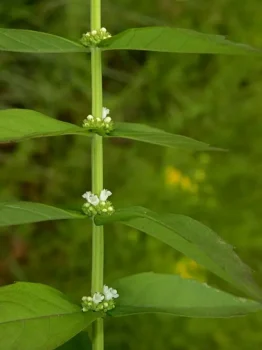
Clasping Water Horehound: A Hidden Gem for Your Wetland Garden
If you’re looking to create a thriving wetland garden or restore a soggy corner of your yard, let me introduce you to a delightful native plant that deserves more attention: clasping water horehound (Lycopus amplectens). This unassuming perennial herb might not win any flashy flower contests, but it’s a true champion when it comes to supporting local ecosystems and solving those tricky wet-soil gardening challenges.
What Exactly Is Clasping Water Horehound?
Clasping water horehound is a native perennial forb that belongs to the mint family, though it lacks the strong aromatic qualities of its more famous cousins. This herbaceous plant is perfectly adapted to life in consistently wet conditions, earning its designation as an obligate wetland species across all regions where it grows.
You might also encounter this plant listed under its historical names, including Lycopus pubens or Lycopus sessilifolius, but rest assured—they’re all referring to the same wonderful wetland dweller.
Where Does It Call Home?
This eastern native has made itself comfortable across fifteen states, primarily along the Atlantic coast and extending into the Midwest. You’ll find clasping water horehound growing naturally from Massachusetts down to Florida, and west into states like Indiana and Alabama. It’s particularly fond of coastal plain wetlands, marshes, and soggy woodland edges.
- Species observed
- No observations
Why Your Garden Will Love This Wetland Wonder
Here’s where clasping water horehound really shines as a garden addition:
- Problem solver extraordinaire: Got a perpetually soggy spot that kills other plants? This is your answer.
- Pollinator magnet: Those small white flowers that appear in late summer are beloved by native bees and other beneficial insects.
- Low maintenance: Once established, it practically takes care of itself.
- Ecological value: As a native species, it supports local wildlife and fits seamlessly into natural ecosystems.
- Spreading habit: It naturally fills in wet areas through underground rhizomes, creating dense colonies over time.
Perfect Garden Settings
Clasping water horehound isn’t meant for your typical flower border—it has very specific habitat preferences that make it ideal for:
- Rain gardens and bioswales
- Pond and stream edges
- Wetland restoration projects
- Native plant gardens with wet conditions
- Naturalized bog or marsh gardens
- Areas with seasonal flooding
Growing Conditions That Make It Happy
Since this plant is classified as obligate wetland across its entire range, moisture is absolutely non-negotiable. Here’s what it needs to thrive:
- Moisture: Consistently wet to saturated soils—think swamp-like conditions
- Sunlight: Full sun to partial shade (adapts well to varying light conditions)
- Soil type: Clay, muck, or sandy soils that stay wet
- Hardiness: Suitable for USDA zones 4-9
- pH tolerance: Adaptable to various pH levels as long as moisture needs are met
Planting and Care Tips
The good news about growing clasping water horehound is that once you get the conditions right, it’s remarkably self-sufficient:
- Site selection: Choose the wettest spot available—seriously, you can’t overdo it with moisture
- Planting time: Spring or fall work well, but spring gives plants time to establish before winter
- Spacing: Give plants 12-18 inches apart, though they’ll naturally fill in over time
- Watering: If you’ve chosen the right wet location, you’ll rarely need to water
- Maintenance: Minimal—just remove dead stems in late winter if desired
- Propagation: Spreads naturally by rhizomes, or you can divide established clumps
A Few Things to Keep in Mind
While clasping water horehound is a fantastic native plant, it’s not right for every garden situation. This is definitely a specialist that needs consistently wet conditions to survive. Don’t attempt to grow it in average garden soil—it simply won’t make it through dry periods.
Also, like many wetland plants, it can spread fairly aggressively in ideal conditions. This is actually a feature, not a bug, when you’re trying to establish wetland vegetation, but keep it in mind for smaller garden spaces.
The Bottom Line
If you have a wet, challenging area in your landscape that seems impossible to garden, clasping water horehound might just be your new best friend. This native perennial offers ecological benefits, requires minimal care once established, and helps create habitat for beneficial insects and other wildlife. It’s not the showiest plant you’ll ever grow, but it’s definitely one of the most reliable for wet conditions.
Ready to embrace your garden’s soggy side? Clasping water horehound is waiting to prove that wet doesn’t have to mean weedy—sometimes it just means wonderfully wild and native.