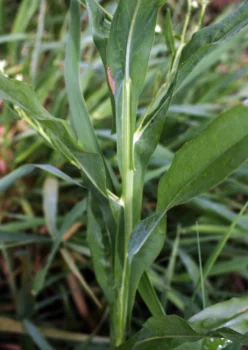
Claspingleaf Doll’s Daisy: A Rare Native Gem for Your Garden
Meet the claspingleaf doll’s daisy (Boltonia decurrens), a charming native perennial that’s as rare as it is beautiful. This delicate wildflower might not be on every gardener’s radar, but it definitely should be – especially if you’re passionate about supporting native ecosystems and creating habitat for pollinators.
What Makes This Plant Special?
The claspingleaf doll’s daisy is a true American native, originally found along the floodplains and wet prairies of the Midwest. What sets this perennial apart is its cloud-like display of tiny white daisy flowers that bloom when most other plants are winding down for the season. Think of it as nature’s way of providing a grand finale to the growing season!
Where It Calls Home
This prairie beauty has a pretty exclusive address – you’ll find it naturally growing in just three states: Illinois, Iowa, and Missouri. It’s a plant that evolved alongside the great river systems of the Midwest, thriving in the rich, moist soils of floodplains and wet meadows.
- Species observed
- No observations
A Plant That Needs Our Help
Here’s where things get serious: claspingleaf doll’s daisy is listed as Threatened, meaning it’s in real trouble in the wild. Much of its original habitat has been lost to development and agriculture, making this plant increasingly rare. As gardeners, we have a unique opportunity to help preserve this species by growing it in our landscapes – but only when we source it responsibly from reputable native plant nurseries or conservation programs.
Why Your Garden (and Local Wildlife) Will Love It
Despite its delicate appearance, this perennial is surprisingly tough and offers several benefits:
- Provides crucial late-season nectar for butterflies, bees, and other pollinators when few other flowers are blooming
- Creates a naturalized, meadow-like appearance that’s perfect for prairie-style gardens
- Thrives in challenging wet conditions where other plants might struggle
- Requires minimal maintenance once established
- Helps support biodiversity by preserving a native species
Growing Claspingleaf Doll’s Daisy Successfully
If you’re ready to welcome this rare beauty into your garden, here’s what you need to know:
Perfect Growing Conditions: This moisture-loving perennial thrives in full sun and consistently moist to wet soils. It’s particularly well-suited for rain gardens, low-lying areas, or anywhere that stays naturally damp. Think of it as a plant that actually appreciates those soggy spots in your yard!
Climate Compatibility: Hardy in USDA zones 4-8, this plant can handle cold winters and hot summers, making it adaptable to much of the continental United States.
Garden Design Ideas: Claspingleaf doll’s daisy shines in naturalized plantings, native plant gardens, and restoration projects. Pair it with other moisture-loving natives like wild bergamot, swamp milkweed, or blue flag iris for a stunning native plant community.
Planting and Care Tips
The good news? Once you’ve got this plant established, it’s refreshingly low-maintenance:
- Plant in spring after the last frost date
- Choose a location that receives full sun (6+ hours daily)
- Ensure consistent moisture – this isn’t a plant for dry, sandy soils
- Allow space for natural spreading in informal plantings
- Deadhead spent flowers if you want to prevent self-seeding, or leave them for wildlife
- Cut back in late fall or early spring
A Conservation Success Story in Your Backyard
By choosing to grow claspingleaf doll’s daisy, you’re not just adding a beautiful plant to your garden – you’re participating in conservation. Every garden that hosts this threatened species creates a small refuge and helps ensure its survival for future generations.
Just remember: always source your plants from reputable nurseries that propagate from legally collected seed or established populations. Never collect from wild populations, as this could further harm already struggling communities of this rare plant.
Ready to make a difference? Consider adding this gentle giant of conservation to your native plant collection. Your local pollinators – and the planet – will thank you!