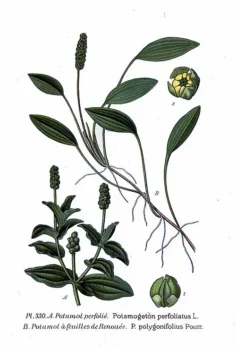
Claspingleaf Pondweed: The Underwater Native That’s Perfect for Water Gardens
If you’ve ever peered into a clear lake or pond and spotted graceful, ribbon-like plants swaying gently beneath the surface, you might have been looking at claspingleaf pondweed (Potamogeton perfoliatus). This charming native aquatic plant is like the unsung hero of North American waterways – quietly doing important work while creating beautiful underwater landscapes.
What Makes Claspingleaf Pondweed Special?
Claspingleaf pondweed gets its name from its most distinctive feature: oval-shaped leaves that literally clasp or wrap around the stem like they’re giving it a hug. These perennial aquatic plants are true natives, calling home to an impressive range that spans across Canada, the lower 48 states, and even Greenland. You’ll find them thriving in waters from Alabama to Labrador, making them one of our most widely distributed native aquatic plants.
- Species observed
- No observations
As an obligate wetland species, this plant is essentially married to water – it almost always occurs in wetlands and won’t survive outside of aquatic environments. Think of it as the opposite of those plants that hate wet feet; claspingleaf pondweed absolutely demands them!
Why Consider Claspingleaf Pondweed for Your Water Garden?
Here’s where things get interesting for water gardeners and pond enthusiasts:
- Native authenticity: You’re supporting local ecosystems with a plant that truly belongs
- Low maintenance: Once established in suitable conditions, it largely takes care of itself
- Water quality improvement: Like many aquatic plants, it helps filter and oxygenate water
- Natural beauty: Creates graceful underwater meadows that look stunning in clear water
- Wildlife habitat: Provides shelter and foraging areas for aquatic creatures
The Reality Check: Is This Plant Right for You?
Let’s be honest – claspingleaf pondweed isn’t for everyone. This is a specialized plant with specific needs:
Perfect for: Natural water gardens, wildlife ponds, lake restoration projects, and anyone wanting to create authentic aquatic ecosystems
Not suitable for: Terrestrial gardens, container water features, or small decorative ponds where you want dramatic above-water foliage
Growing Conditions and Care
Successfully growing claspingleaf pondweed is all about recreating its natural habitat:
Water Requirements
- Needs to be fully submerged in clean, clear water
- Thrives in depths of 3-12 feet
- Prefers good water circulation and quality
- Requires stable water levels
Climate Considerations
Hardy in USDA zones 3-9, this tough perennial can handle cold winters by dying back to underground rhizomes and re-emerging in spring. It’s remarkably adaptable to different climates across its native range.
Establishment and Care
Getting started with claspingleaf pondweed requires patience and the right approach. The plant typically establishes through rhizome fragments or seeds, though finding sources can be challenging since it’s not commonly sold in garden centers. Your best bet might be working with native plant societies or aquatic restoration specialists.
Once established, care is minimal – nature handles most of the work. The key is maintaining good water quality and stable conditions.
A Word About Expectations
Don’t expect showy flowers or dramatic seasonal displays. Claspingleaf pondweed produces small, inconspicuous flowers on spikes that emerge above the water surface, but they’re wind-pollinated and not particularly ornamental. The beauty lies in the underwater foliage and the ecological value it provides.
The Bottom Line
Claspingleaf pondweed is a specialist plant for specialized situations. If you’re creating a natural water garden, restoring aquatic habitat, or simply want to support native biodiversity in your pond, this humble native deserves serious consideration. Just remember – success depends on providing the right aquatic environment and managing expectations about its ornamental qualities.
While it may not win any awards for flashy garden appeal, claspingleaf pondweed represents something equally valuable: authentic native beauty that supports local ecosystems while creating peaceful underwater landscapes that connect us to the natural world.